Note: Another week of almost exclusively picture books. I need to catch up on a lot of my other reading, but neither the energy or time is there right now.
I’m doing better than usual with books with diverse main characters and books by diverse authors, but own voices titles are still woefully behind. Stats:
48 Books Read This Week
30 Books with Diverse Main Character (63%)
26 Books by Diverse Authors (54%)
7 Books by Own Voices Authors (15%) (to the best of my knowledge)
Note: I had 2 actually well attended Teen Programs this week and read very little. But I am actually planning on making a real post again about the program win so yay!
Note: I wasn’t feeling the reading this week, so I leaned heavily on picture books.
I’m going to do my best to keep myself to my reading goals created a during my mid-year reading, and here are some stats I’m going to try to keep track of week-to-week:
51 Books Read This Week
35 Books with Diverse Main Character (69%)
14 Books by Diverse Authors (27%)
11 Books by Own Voices Authors (22%) (to the best of my knowledge)
You might have noticed from those What Are You Reading? posts that I read. A lot. I read a lot of picture books (which I know many people don’t count in reading totals). I also read a lot of graphic novels, which can generally be considered “faster” reads than chapter books. But, even with those considerations, I know I read a lot.
I’m privileged in the time I can dedicate to reading–I only work one job and reading is directly related to that job (though not something I really ever get to do on the job). My job gives me easy access to free books, without having to go out of my way to pick them up or even to track down a list of new releases. I don’t have kids or the responsibilities that come up with taking care of young people. Even though I go through slumps, I genuinely enjoy reading. And I’ve had particularly a lot of time for it during the pandemic.
I pride myself on reading books featuring diverse characters. I didn’t really do this as a child, beyond the books that won awards or were regularly in recommendations from school and public librarians. I didn’t think about what the characters in my books looked like until I started library school. (More privilege. I’m just chock-full of that.) I had some pretty phenomenal professors that pointed my head in the right direction, and since then, especially in that last few years, I’ve been making a conscious effort to read diverse kids books.
I know that I’ve made a specific effort to book talk titles featuring diverse characters–though, now that I look again at my process, 3/9 isn’t as high a ratio of diverse books to white/non-human books as I would like. Especially when I put the research in and discover that two of those three books are written by white authors. I’ve been trying to correct that by focusing exclusively on own voices in more recent video book talks — but I’ve already felt the itch to book talk a non-own voices book, and I’m afraid once I open myself to that, I’ll once again not promote own voices books as much as I should.
I also know that my storytimes do not feature enough diversity. I tend to blame this on my typical age group–babies–and the overall lack of books that I really feel is ideal for those wiggling one-year-olds. While the industry definitely has issues, that lack of diversity in my storytimes is squarely on me, and something I’m looking at.
So what is this post about? I want to look at what I’ve actually read so far in 2020.
If anyone has a recommendation on how to do this that is simpler than creating a spreadsheet and reviewing each title one at a time, please let me know. I mark a lot of these things through Goodreads shelves, though, for reasons I do not understand, Goodreads will not show me all of the books I read this year in a way that was easily sortable–it kept dropping off the last 100, which left me with incomplete data.
My own voices data is particularly questionable, as it is subject to searching for a Google image of an author I wasn’t sure of, and then going to their author website if I still wasn’t sure, or if I was genuinely surprised by their whiteness (more often than not unfortunately). I’m hoping to rectify this by making this a more regular effort instead of trying to quickly sort 720 books in one weekend.
Some of the data doesn’t quite add up the way you would imagine, as some books are in multiple categories. For example, there are some picture books and graphic novels also tagged as non-fiction titles.
The breakdown is below.
Mid-Year 2020 Reading Statistics
Format/Intended Age:
329 Picture Books (46%)
129 diverse main characters (39% of picture books)
191 Graphic Novels (27%)
44 diverse main characters (23% of graphic novels)
80 First Chapter Books (11%)
45 diverse main characters (56% of first chapter books)
50 Beginning Readers (7%)
20 diverse main characters (40% of beginning readers)
34 Juvenile Fiction Chapter Books (5%)
13 diverse main characters (35% of juvenile fiction)
8 Teen Fiction Books (1%)
4 diverse main characters (50%)
4 Adult Fiction Books (0.5%)
0 diverse main characters (0%)
Fiction/Non-Fiction/Genre:
66 Non-fiction (9%)
29 contain diversity in “characters” (picture books/graphic novels teaching facts), biographies, memoirs, or focus on racism (44% of non-fiction)
19 Biographies (3%) (also included in NF)
653 Fiction (9%)
231 contain diverse main characters (35% of fiction)
Author Makeup:
475 Books Written By Female Authors (66%)
238 Books Written By Male Authors (33%)
153 Non-White Authors (21%)
Diversity:
260 Diverse Main Characters (36%)
132 Diverse Main Characters Written By Own Voices Authors (18%)
28 LGBT Main Character (4%)
Breakdown: Format/Intended Audience
329 Picture Books (46%)
129 diverse main characters (39% of picture books)
191 Graphic Novels (27%)
44 diverse main characters (23% of graphic novels)
80 First Chapter Books (11%)
45 diverse main characters (56% of first chapter books)
50 Beginning Readers (7%)
20 diverse main characters (40% of beginning readers)
34 Juvenile Fiction Chapter Books (5%)
13 diverse main characters (35% of juvenile fiction)
8 Teen Fiction Books (1%)
4 diverse main characters (50%)
4 Adult Fiction Books (0.5%)
0 diverse main characters (0%)
I know I read a lot of picture books, and those inflate my overall reading count for the year. I am pleasantly surprised that picture books only make up 46% of my reading for the year (though when I include the similarly-sized Beginning Readers, those types of books make up a combined 52% of my reading so far this year). I’d like to continue to try to keep my picture book reading to under 50% of my overall books for the year, to make sure I am digging into those older age ranges.
Graphic novels have become my comfort zone, particularly for the speed I can read them and their popularity with our patrons. Next time, I would like to break this number down further with the age range the graphic novels are aimed at. I’d like to hold this count steady around 25% of my reading.
During quarantine, I made a particular effort to increase the first chapter books I read, particularly diverse titles. I think that is reflected here. Even with first chapter books being only 11% of my total reading for the year that is much higher than previous years (based on my knowledge of my reading not any formal stats).
These three areas are my weakest reading age ranges
Beginning Readers: I struggle with these because I love a good story, and these are not written with the “good story” angle in mind.
Juvenile Fiction: I knew my juvenile fiction chapter books have been weak this year, but ouch. Only 5% of my reading has been traditional chapter books–I’m going to work on that.
Teen Fiction: If I thought my middle grade reading was low, teen books are abysmal. Though, I will try to defend this a little because at least 30% of those graphic novels are for teens. I don’t program for teens, and we don’t get as many reader’s advisory questions, and…I’ve let this age range slip. Badly. (Michala go write a teen book blog post!)
The second piece of this category I wanted to examine was diverse main characters at the format-level.
While the wait for census numbers will probably take much longer than usual due to the pandemic, the projections for 2020 have remained the same for years: the expectation is that of children in the US (under the age of 18), 49.8% will be “non-Hispanic White.” My reading reflects the books I talk about and share, and my reading needs to, at a minimum, reflect the races of kids today too. I would like to have each of these categories be comprised of at least 50% books featuring diverse main characters.
That isn’t going to be easy–the majority of books published are very white-centered or animal-driven, and while that has been improving a little, it hasn’t improved to the point of enough new titles to necessarily let me increase my reading across these categories without intentionally not reading any other books in those categories. I also need to realistically consider what my reading will look like post-working-at-home. Fifty percent in each category is not likely to happen this year–but maybe it can happen in one or two categories this year, and more over the next few years.
Next Steps:
Continue reading any diverse picture books and first chapter books I can access.
Actively look for more diverse beginning readers and graphic novels. These are two areas that I’ve always felt are weak proportionately in diversity, at least in my library. Dig harder here.
Read more juvenile fiction chapter books, focusing on diverse titles. There have been 10 beside my bed for a week. Actually read them.
Breakdown: Fiction/Non-Fiction/Genre
66 Non-fiction (9%)
29 contain diversity in “characters” (picture books/graphic novels teaching facts), are biographies or memoirs, or focus on racism (44% of non-fiction)
19 Biographies (3%) (also included in NF)
653 Fiction (91%)
231 contain diverse main characters (35% of fiction)
I don’t like non-fiction. Sorry world. I never enjoyed reading non-fiction as a child, and I very, very rarely do as an adult.
Since I struggle with non-fiction (and biographies) so much as it is, I’m going to try to make sure that the books I do read include diversity. I have a tendency to only read non-fiction books about animals, and I want to shift that towards more biographies and memoirs. Poetry is wrapped up in non-fiction too, and while I don’t think I will ever actively enjoy poetry, it is very easy for me to commit to reading diverse poets and generally avoiding white ones.
I can’t even out all of my reading percentages, and this is one that, while I know it is an issue from a reader’s advisory perspective, I am going to set aside for now, though keep it in the back of my mind. I will keep an eye out for reading lists containing great diverse non-fiction for kids, and try to focus on those.
Next Steps:
Keep an eye out for more diverse non-fiction titles.
Read more biographies – increase biographies read during the year to at least 6%.
Breakdown: Author Makeup
475 Books Written By Women Authors (66%)
238 Books Written By Male Authors (33%)
153 Diverse Authors (21%)
Again, I have to choose what I want to work on, and I’m going to let my female-male breakdown go. I’m reading more books by female authors than male authors. I would like to dig into non-binary authors and authors that identify as multiple genders (and, honestly, some of the authors on my list may do that–this was not the best researched spreadsheet).
I do need to focus on reading books by diverse authors. I’ll get into this more in the next section, but the disproportion between books I’ve read written about diverse kids and books written by own voices authors is alarming. (Only half of the diverse main character books I read this year are by own voices authors! Half!) Having 21% of my reading reflect books written by diverse authors is a start, but it is far from where I would like to be. I want to focus heavily on that number during the second half of this year.
Next Steps:
Read more books by authors who are non-binary or identify as multiple genders. Not really examined here, but read more books by transgender authors too.
Read more books written by diverse authors. Aim to get that percentage to at least 33% by the end of the year.
Breakdown: Diversity
260 Diverse Main Characters (36%)
132 Diverse Main Characters Written By Own Voices Authors (18%)
28 LGBT Main Character (4%)
These were the numbers I was really looking for. I’ve been actively seeking out books with diverse main characters, so I’m glad this number was a bit higher than I expected when I started looking at titles (but not as good as I secretly hoped). This is exactly why I need to actually look at the data though–because if I had to make a guess a month ago, I probably would have said that 40-50% of what I read is diverse, and that is not the case.
The real rude awakening for me, particularly over the last few weeks, has been how many books featuring diverse main characters are written by white authors. That hurt because, in the fake world in my head, I had assumed that the increase in books featuring diverse characters, that I was seeing and reading each year, also meant more diverse authors were getting published. This has never been true, and while the information was right there for me to find, I naively believed otherwise for far too long.
I’ve noticed the own voices dilemma in my own reading and book talking as I’ve started to make virtual book talk videos, focusing on own-voices titles. So many books I recommend regularly or put on displays–Bad Babysitters, Sanity and Tallulah, Zoey and Sassafras, Molly Lou Melon, Lola and Leo, Jabari, Emma on the Air, Katie Woo, and so many more–are all by white authors. Some have connections to the community they write about–the author of Emma on the Air is married to a man from the Dominican Republic and has two mixed children–but it isn’t the same.
I need to do more research when selecting books to read, and make more of an effort to read those books actually written by own voices authors. The other books can be good too, but the own voices books need to take priority.
Next Steps:
Prioritize–in reading, book talking, and dispalying–books by diverse authors featuring kids that look like them.
Increase the amount of books read by own voices authors to at least 25% by the end of 2020.
Increase the amount of books featuring LGBT characters to at least 8%.
Final Thoughts
Overall, these numbers weren’t as bad as I expected but also weren’t as good as I secretly hoped.
I’m interested to revisit this at the end of the year and see where these numbers end up. I like creating specific steps to move toward my goals, but I also tried to ground my goals in smaller increases because, once I go back to in-building work full time, my amount of reading overall will decrease. I can also tell that I am starting to hit a reading roadblock–I keep trying to push through, but I can already tell it is much harder for me to get through a chapter book than a faster picture book or graphic novel right now.
There are so many more elements of my reading I could examine. How does my reading breakdown over typical genre lines? How does diversity breakdown over genre lines? How about male vs. female main vs. non-binary main characters? I really didn’t dig into LGBT characters and authors as much as I could have here. This list focuses on the books I’ve read this year–can I examine what I used in storytime? What books I book talked or used in programs? All the books I’ve ever read?
This is a new process for me, and a daunting one, though necessary. How do you examine your reading? How do you keep track of what you do–and don’t–read enough of?
Note: I’ve been using my free time to dig into my own privilege and see what I actually do to promote BIPOC voices. I pride myself on reading a lot of books with diverse characters and featuring diverse characters in my book talks in particular-but do I really? Or do I just read a lot? I’ve also been learning that quite a few of my regular book talk titles feature diverse characters, but are written by white authors. I’m planning to dig into my 2020 reads and these topics in this week’s “substance” blog post (what I think of as my not-storytime and not-what-I-read post).
I was hoping to have my post on non-white kids musicians for this week, but I don’t think that is going to be done yet, and I don’t want to half fast that project. I’m trying to collect artists, CDs and singles (including digital exclusives), and also pull out standout storytime songs (based on my personal preferences). I know for me, doing the work to actually listen to the albums and find songs I would use is a big step that takes a lot of time. I’m hoping doing some of that legwork for this post helps get these songs into other librarian’s hands faster. I also like to think there are more localized non-white kids artists that don’t have a national recognition, but do have music–I want to track down as many of those as I can.
I don’t do many flannel or magnet stories featuring people (of any color), but I’ve also been thinking about this post on the Mouse in the House flannel and inclusivity. Also, I realize that most of what I have been thinking about is storytime-related, and I need to be going beyond that.
A lot of reading time this week was replaced with TV watching (Good Omens; Love, Victor; Agents of SHIELD; Handmaid’s Tale; and Babysitter’s Club if you’re curious). This week’s reading highlights:
Note: And once again I am light on reading because life takes over and I’m garbage at budgeting time lately. I need structure to be functional, but I need less people interactions for health safety.
Note: Still tired, though I am super excited to have real new books again (instead of eBooks and eARCS). Of course, physical new books, plus eARCS means more reading. This also meant a lot of picture books that I needed to turn around quickly.
Note: I got distracted from reading much of this week by my beautiful baby boy! His front legs are shorter than his back legs and his tail is about 6 inches too short for his body. He waddles and snores and is so weird and I love him. This is Professor “Frankie” Frankleton adjunct purr-fessor of meow-thematics.
Note: Wow working in the building again is exhausting, especially since most of my in-building duties involve physical labor. That combined with Elephant & Piggie Storytime on Saturday left me exhausted, and I’m glad I read more earlier this week because nothing was happening after my in building days Friday and Saturday.
No details on these because I’m tired, but these books were particularly awesome:
Note: I’m in that limbo state where you work part time in the building and part time at home so you feel like you are both always working and not working enough….
Note: Pushing through as much reading as I can before I officially start partial back-in-the-building work this week, and (most likely) regular back to work schedule at the end of the month. Reading will drop off then between the commute, regular work exhaustion, and the added cleaning measures due to COVID and taking care of folks that are high risk.
Note: I’m back in building 2 days a week now and am feeling extra burnt out. I was already dying from no human interaction and ramifications from the plague, now physical activity that I haven’t done in months and human peoples I don’t know how to interact with anymore combined with online burnout from my teens not coming to programs since they aren’t the same kind of weird fun we normally get to do (I don’t know how to make a Hunger Games Nerf War online!) and I am officially all kinds of destroyed. Positive note, I get a cat this week so hopefully he helps my morale a bit.
Note: My reading is slowing down a little, and I expect it to continue to do so between real-world issues taking precedence and the return to working in the library. Not looking forward to that commute.
Reading Highlights:
Love is Powerful – Timely picture book focusing on promoting love and kindness and the power of peaceful protest.
Sherlock Bones – Fun, quick mystery that is written and illustrated in a style that will really appeal to Bad Guys fans.
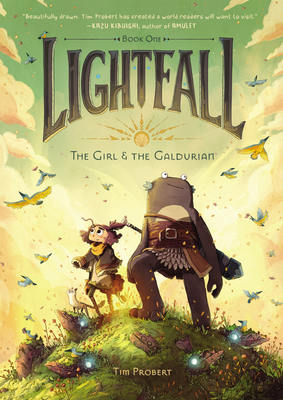
Lightfall – Yet another Amulet readalike that will have a great audience. Looking forward to the rest of the series. I hate to say “yet another” because all three of these graphic novels from the last few weeks are really strong on their own–it just feels odd to be reading them in such succession.
Measuring Up – Cooking, friendship struggles, and a much needed diverse, realistic fiction graphic novel great for fans of Smile.
What Lane? – Torrey Maldonado does great work again with this realistic fiction story of a young mixed boy beginning to recognize the differences in his (white and black) friend groups and the acts of racism that surround him everyday. Particularly great because while the main characters are in middle school, I feel comfortable handing this to a 3rd-4th grader.
Eels – Wow, eels are incredibly weird, strange creatures. Well written, appealing non-fiction that is easy to booktalk.
Note: This week was very picture book heavy, with a ton of great eARCs mixed in with Hoopla Bonus Borrows (many of which aren’t included here because they are fairly well known books, and isn’t this list long enough?). Finished the Babymouse series this week and almost done with Nikki & Deja.
Reading Highlights:
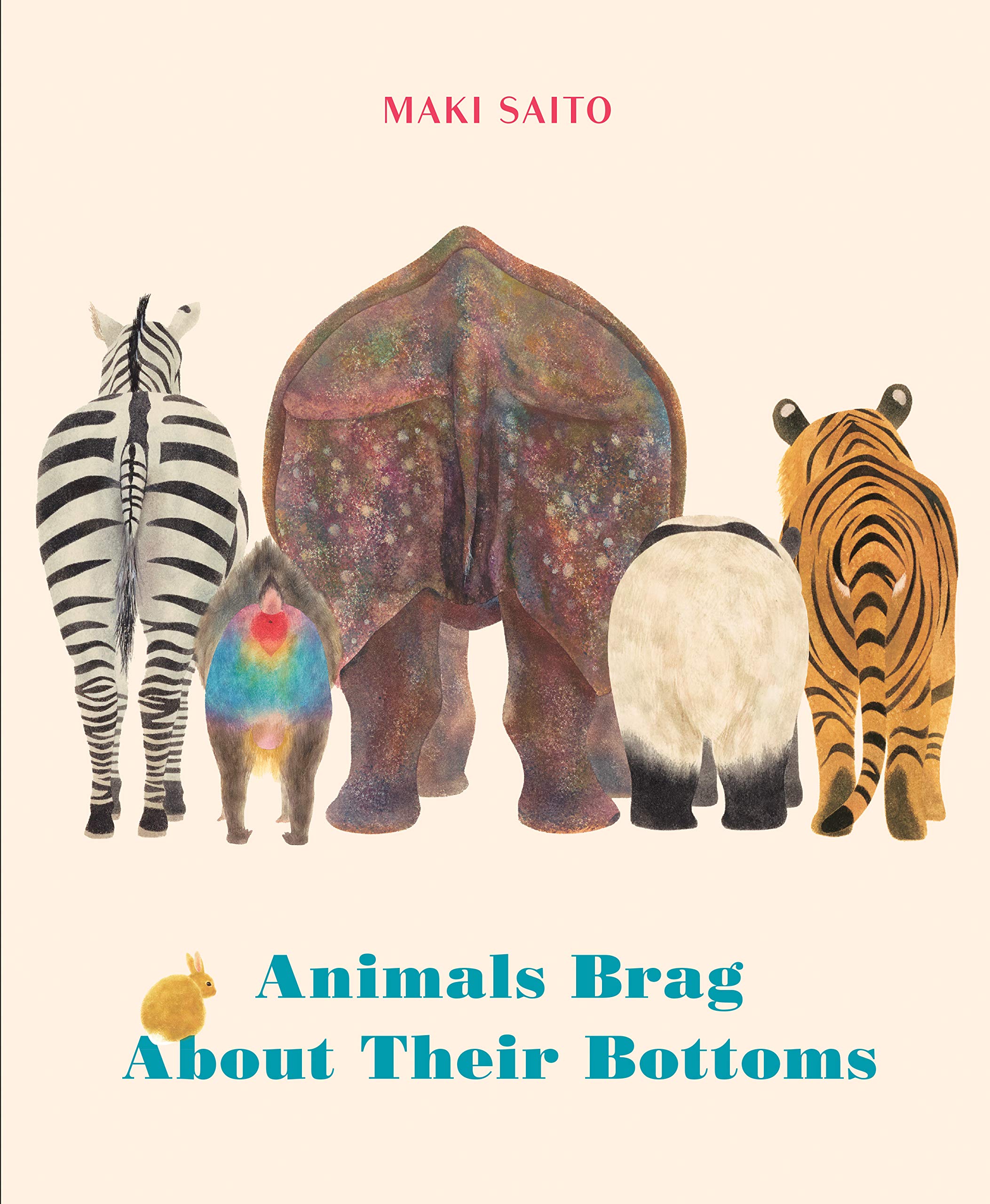
Animals Brag About Their Bottoms – This is just another adorable picture book title where it is exactly as advertised–animals brag about their big, stripey, furry, unique bottoms. Somehow mixes what will be a humorous read aloud about animals with body positivity.
Superhero Gran – This one stood out to me as a great storytime book, especially with the amount of grandparents we have in our community.
This is a Book of Shapes – Is it terrible that I wish this book didn’t have the animal inserts and humor and was literally a book of “this is a square” with an illustration of a square on a white background (about two thirds of the book is formatted like this)? Why can’t we have more really, really simple books that don’t try to be more? Do publishers have any idea have many copies I would beg my library to purchase that were literally just “A” “a” on a white background that were big enough to trace with a finger?
Fence: Rivals – Fence is back! More Fence! More Fence!
Note: Some part of my brain decided that this was the perfect weekend for cleaning, creating real storage solutions (instead of hodgepodge-ing what I own), and going through my Disney pin collection. About twelve hours into all of that, my brain wanted to know why I thought this was a good idea. Too late now.
Reading Highlights:
Slow Samson – I’m always up for a sloth picture book, even if I’m not as obsessed as Michala, and this is a solid read with a good plot about friendship and embracing differences.
The Weirn Books – This is my second stand-out fantasy graphic novel in the last two weeks (Beetle & the Hollowbones was last week’s). There are going to be a ton of great titles out there by the end of the year for fans of Amulet and Snapdragon.
Sasha & Puck (Elixir Fixers) – I love this first chapter series, and I really hope more books are published. It is a great mixture of a spunky and intelligent female main character, a sprinkle of scientific thinking, and a touch of magic. Plus diverse main character. I want more.
**Note about Iggy Peck and the Mysterious Mansion – I feel bad for this title–if it had been published in an alternate universe, I wouldn’t feel like I would need to write something. However, we are living in a pandemic-filled world. The book digs into a mystery connected to the Spanish Flu, specifically the (dead) daughter of a mansion owner. There is a part, small as it is, that essentially says (not exact words, I was listening to the audio)–“The Spanish Flu was scary and millions of people died, but don’t worry, we have doctors and great medicine now, so that will never happen again.” This may not be the best title to hand to a child at the current moment.