Books

It’s Monday! What Are You Reading?

We are joining the blog trend of Monday posts about what we have read during the last week (8/31/2020-9/6/2020).

Annamarie’s Reading

Picture Books:

Everything Else:

Note: My reading is very picture book heavy–life is throwing me lots of curveballs this week.

Stats for the Week:

  • 56 Books Read This Week
    • 42 Books with Diverse Main Character (75%)
    • 30 Books by Diverse Authors (54%)
    • 25 Books by Own Voices Authors (47%) (to the best of my knowledge)

This week’s reading highlights:

Michala’s Reading

Note: Happy Labor DayI I hope that you are enjoying your day off (or that you got the day off) After reading a bunch of graphic novels in the hopes that I could match Annamarie with number of titles read (spoiler alert I did not even come close), I have decided that I will not be reading anything today. Instead I am going to hang up some art that has been waiting to be displayed forever and love all over my fuzzball Frankie so he doesn’t act like the kitty in No Fuzzball!

Virtual Reader’s Advisory

Our library is closed to the public, including for browsing. Our county COVID numbers just dipped low enough for us to allow for appointment based services, but, sorry to all of the school districts that decided to start the school year with blended learning at the last minute, but I do the same math the governor’s team does every day, and our county numbers are increasing. Again. The reason any of that is relevant to this post is that the public will not be browsing our shelves anytime soon…meaning reader’s advisory is not the same experience.

And browsing is something we hear about frequently. Kids in particular often don’t know what they want to read (or they know EXACTLY what they want to read and will take nothing else). Parents are trying to homeschool or supplement in-person schooling, and they are eager for beginning reading books in particular. How can we recreate the browsing and reader’s advisory experience for our users?

New & Awesome Books to Reserve

These short clips are designed to be Instagram posts or Instagram stories (identical, vertical versions are used on that platform, all under 15 seconds to accommodate Instagram story rules). There seems to be a positive response to these reader’s advisory tools–the first Instagram post got a lot of happy feedback (I think people missed seeing inside the library). The most recent Instagram story (first chapter books) got more click-through response than other stories I had created in the past.

I really wish there was a way around the 15-seconds, or a way to make it easier for viewers to see titles and immediately put them on hold. I recognize the books in the video, but I can’t imagine many parents do without having to put in the effort to watch multiple times and pause a clip.

New & Overflow Books (July 2020) (this was a first attempt and this video is longer than most)

New Books (August 2020)

Beginning Readers

First Chapter Books

Parent Teacher Collection Titles

Virtual Reader’s Advisory

These reader’s advisory videos have a few purposes:

  • Reader’s advisory tool to supplement the lack of browsing
  • Possible substitute for in-person book talks that take place in local classrooms

We’ve had an okay response to these reader’s advisory YouTube videos. I hope that these are useful to teachers and students, especially as the school year progresses (and post-COVID too!).

My book talk video filming tips:

  • Film in Short Clips. My filming structure involves me talking for 1-2 sentences before cutting to a new clip. I find this really valuable when I am trying to get my words exactly right (especially important when sharing books that talk about racism, neglect, or aspects of a culture that isn’t my own). I don’t memorize what I’m going to say, but this quick structure makes it a lot easier for me to redo a clip as needed. Refilming something 20-30 seconds long is easier, and it is much less frustrating than getting to the end of the clip and messing up a pronunciation.
  • Add visual interest. Add images from the book whenever possible. Some books are chapter books without images where this doesn’t make sense, but whenever I can, I add images and change them regularly. An adult has about an 8-second attention span in non-COVID times. Watching me sit and talk at a screen for even just a minute is boring. Images help.
  • Talk about books you like. Always. I only book talk books I’ve read, enjoy, and can vouch for. I’m not this strict when I’ve got an in-person reader’s advisory experience, with a patron in front of me asking for Wonder readalikes, but when I’m only able to take a handful of books to a classroom, or in this case, select what books I want to put my time and effort behind highlighting, I want to make sure they are books I genuinely enjoyed and think kids will enjoy too.
  • Recommend diverse books. Following the last tip, this means you need to be reading diverse books. Hopefully you are. I don’t care how white your community is–even if your community is made entirely of clones of one Christian, straight, physically and mentally able white boy–there is a whole world out there that those kids need to be aware of and empathetic toward. (Also, if you are living in a community filled with cloned children, I would suggest you stop reading now and run. Fast.)
  • Look up those pronunciations. Author names, illustrator names, character names, settings. Look up them all. Don’t be the Annamarie of three years ago who mispronounced Amina’s name repeatedly in a book talk video for Amina’s Voice that still makes me cringe every time I see it on YouTube.
  • Of course, all the regular technical things:
    • Film with the highest quality camera you can access
    • Good lighting (don’t sit in front a window, avoid shadows)
    • Good sound
    • Consistent feel/intro/conclusion
    • Easy access for a viewer to put the book on hold in your catalog

I’ve made a lot of videos, and this post is already long, so I’m going to try to highlight grade level playlists and list links to specific titles underneath. Many books appear on multiple grade levels because they appeal to multiple ages.

Book Talks: Preschool
We are focusing on books for the ages we regularly book talk to in the schools (Grades 2-6), so there are fewer videos for this age.

Book Talks: Kindergarten
We are focusing on books for the ages we regularly book talk to in the schools (Grades 2-6), so there are fewer videos for this age.

Book Talks: 1st Grade
We are focusing on books for the ages we regularly book talk to in the schools (Grades 2-6), so there are fewer videos for this age.

Book Talks: 2nd Grade

Book Talks: 3rd Grade

Book Talks: 4th Grade

Book Talks: 5th Grade

Book Talks: 6th Grade

Collection Videos
These videos cover more than one title connected by a common theme. These seem to be getting slightly more views, but, be warned, they take a lot longer to make. A 10 Readalikes Video is essentially the equivalent of making 10 individual book talk videos–a lot of effort for what feels like less of a result. I’m going to keep chipping away at these, but they are exhausting, so I don’t make them as frequently. Maybe I’ll focus on these more when I feel like I am slowing down on a regular pool of titles to book talk individually.

12 New Graphic Novels (published in the first half of 2020)

10 Baby-Sitters Club Readalikes

10 Dog Man Readalikes

It’s Monday! What Are You Reading?

We are joining the blog trend of Monday posts about what we have read during the last week (8/24/2020-8/30/2020).

Annamarie’s Reading

Picture Books & Readers:

First Chapter Books:

Graphic Novels:

Everything Else:

Note: I want to give a shout-out to those awesome series by own voices authors featuring amazing, diverse characters in everyday situations. My current favorite characters:

Can we have more of these? So I can fill the shelves with them? Please? Also, who do I need to read about next? Comment your favorites!

Stats for the Week:

  • 57 Books Read This Week
    • 29 Books with Diverse Main Character (51%)
    • 15 Books by Diverse Authors (26%)
    • 13 Books by Own Voices Authors (23%) (to the best of my knowledge)

This week’s reading highlights:

Michala’s Reading

Note: I fell down a little rabbit hole and read all that we had of one manga this week. But I did sneak in a few heavy hitting teen reads so the brain candy was needed. I know I say this a LOT, but I am gonna try to write an actual post this week. I owe it to Annamarie to actually pull some weight on this blog and contribute, even if it is the shortest post in the world.

It’s Monday! What Are You Reading?

We are joining the blog trend of Monday posts about what we have read during the last week (8/17/2020-8/23/2020).

Annamarie’s Reading

Picture Books & Readers:

Graphic Novels:

Everything Else:

Note: In an effort to simply keep up with the volume of books I have right now, I haven’t been doing the best job really focusing on own voices titles (other than continuously realizing how few diverse books are by own voices authors). One step I have taken to move in that direction is only listening to own voices audiobooks. I am happy to say I am back on the audiobooks train–though at a much slower pace than when I was on a committee–and I am enjoying the ability to speed up titles. I’ve been intentionally selecting titles that are by own voices authors, particularly those chapter books that I never seem to have the attention span for reading at the moment.

I’m also trying to prioritize physical books I have checked out that have holds–which sometimes align with own voices books…and sometimes don’t. This focus can leave me with a huge stack of eARCS…which I tried to make a dent in this week, really throwing off my own voices count. I did walk out of the library once this week without a single new book (and I didn’t leave any available holds behind!), so maybe the wave of new books will slow, allowing me to dig into some of the stuff that has been piling up.

Stats for the Week:

  • 62 Books Read This Week
    • 30 Books with Diverse Main Character (48%)
    • 15 Books by Diverse Authors (24%)
    • 10 Books by Own Voices Authors (16%) (to the best of my knowledge)

This week’s reading highlights:

Michala’s Reading

Note: In this to win this. Got my first school “visit” locked into place for September. While virtual is not my norm I played with it during summer school a few months ago, so hopefully this time the kids leave their cameras on so I don’t think they’ve fallen asleep. 🙂

It’s Monday! What Are You Reading?

We are joining the blog trend of Monday posts about what we have read during the last week (8/10/2020-8/16/2020).

Annamarie’s Reading

Picture Books & Readers:

First Chapter:

Everything Else:

Note: More books with diverse main characters, but fewer overall books by own voices authors. I have a good pile of own voices chapter books in my to-be-read stack, but I haven’t had the energy to push into them right now. This weekend, I made a good dent in the shorter books checked out to me–but I do have a rapidly growing eARCs stack that I have abandoned. So. Many. Books.

Stats for the Week:

  • 46 Books Read This Week
    • 31 Books with Diverse Main Character (67%)
    • 20 Books by Diverse Authors (43%)
    • 10 Books by Own Voices Authors (22%) (to the best of my knowledge)

This week’s reading highlights:

Michala’s Reading

Note: I know that I am reading, I know that I am still consuming literature and that I still do reader’s advisory (however few and far between it is now), but because of the weird time vacuum we are in I feel like I have read nothing and it is all for naught. I really miss my teens.

It’s Monday! What Are You Reading?

We are joining the blog trend of Monday posts about what we have read during the last week (8/3/2020-8/9/2020).

Annamarie’s Reading

Picture Books:

Everything Else:

Note: 40 books does not equal a reading drought, but I definitely felt a bit of reading burnout this week. I just didn’t have any interest in reading before bed, even knowing that I had a big stack of graphic novels I had been eagerly anticipating waiting for me. I’m back in the library an extra day next week with a return to more “normal hours”, and I expect my reading to return to normal levels, mostly because I have to try to shift back to waking up around 6-7 am to get to work on time. I get it from the patron perspective, but…commute. Mornings. Why, why, why. I really don’t want to see the sunrise.

Stats for the Week:

  • 41 Books Read This Week
    • 25 Books with Diverse Main Character (61%)
    • 19 Books by Diverse Authors (46%)
    • 9 Books by Own Voices Authors (22%) (to the best of my knowledge)

This week’s reading highlights:

Michala’s Reading

Note: Reading more again. Feeling it more. Quarantine kills my spirit though.

Storytime: Book Retellings

We are on a brief live storytime hiatus as we re-adjust for whatever the fall will bring, so I thought I would highlight one of my favorite storytelling tools: Book Retellings! (Post updated 11/8/20.)

Book retellings were a part of my storytimes well before COVID and the move to virtual programs, though I’ve been happy to dig into them more since I am presenting more storytimes for toddlers and preschoolers. I sometimes use a book retelling element for babies with puppets, but mostly any “story” element is for the caregivers, with me focusing on and emphasizing the puppet reveal and animal sound for the babies.

Looking for more storytime tools? Check out our Storytime Resources page for links to more content.

Book Retellings Pros and Cons

Book retellings allow you to:

  • appeal to visual or action-based learners and listeners (so, most toddlers)
  • make things larger–puppets are often bigger than the pictures on a page, especially when presenting to a large in-person crowd (this distinction isn’t such a big deal behind a camera)
  • include more repetition – a book you read earlier in storytime or the week before could be used as a flannel or puppet activity
  • give caregivers ideas for ways to get excited about familiar stories that might be read over and over and over again at home
  • include props, puppets, and other manipulatives in your program

On the other hand, book retellings put more pressure on you as a presenter. Reading the words on a page with the proper inflection, emotion, timing, and engagement is a challenge on its own. Pulling that off without exact words to guide you can be more challenging. However, I also like to think of book retellings as more freeing–viewers can’t see the words, so if I mix up an animal or two, or intentionally skip an entire portion of the story or rearrange something to make more sense visually, as long as I keep my cool, the audience doesn’t have to know. (I think there is a better word than “audience” here. Storytimes are presentations, in a way, but there is a back and forth–what is the word for an engaged, participating audience? Is that still audience? I’m digressing.)

To Memorize or Not To Memorize

I’m going to say something here that may make some library folks cringe–yell in the comments. Please. I know this is my opinion, and it isn’t a popular one, but I still feel strongly about it, so: it is better if you memorize.

Yes, we aren’t actors. Yes, our caregivers know this. No, most kids don’t really notice if we read. But there are kids that do, and there are adults who also notice, and…well I was that totally judge-y preschooler who really didn’t know any better, and compared you (rightfully or not) to Barney and Sesame Street and the Wiggles, and those real people aren’t reading off of a page or constantly glancing off screen to read their next line.

Yes, there will be mistakes, and no, you shouldn’t refilm a 30-minute pre-recorded storytime 17 times because of one error toward the end. Have a cheat sheet somewhere but don’t make it a script and don’t rely on it. I normally put a list of key words taped either directly below my camera on my tripod or right beside the location where I am hiding the puppets or flannel pieces. If I decide to do a dramatic reveal and look back and forth a few times with fun facial expressions–I’m probably re-reading the next line.

I know this isn’t the way most librarians view or encourage this type of storytime experience, especially because it can make it harder or scarier to jump into something like this. But…I do, personally, feel like it makes it a little better. The storytelling experience is stronger and less stilted. But if you need that script, try it with the script. With time and repetition, you’ll know the story so well that you may be able to stop relying on the piece of paper. (End of Annamarie being rude and judge-y. Please berate me in the comments.)

How to Make Props and Flannels

I steal. I am not as creative as some of my coworkers. Do not be fooled by awesome flannel sets in videos. Some of these things are made by them. Other things are designed based off of me seeing someone else’s work online and remaking piece by piece. Other selections are my personally owned purchased sets, made by awesomely talented people who are not me.

I am not going to continue rambling here because my skills are not great or varied. My one tip, which is obvious to regular crafters but not to those of us new to this domain: get. scissors. just. for. felt. Use for nothing else. The world is a much, much more magical place.

Book Retellings Examples

There are so many great ways to retell stories, but now that I’ve made so many videos for our patrons to watch online, I decided to collect some of my favorites below, in alphabetical order by book title.

Bark George by Jules Feiffer (prop & puppets)
Learn about how I made George in this blog post.


The Bridge Is Up by Babs Bell (magnet)


Brown Bear, Brown Bear, What Do You See? by Bill Martin Jr. (puppets)
Change to whatever animals you have on hand. I tried to select stuffed animals that were different colors to continue the color emphasis from the physical book.


Brown Bear, Brown Bear, What Do You See? by Bill Martin Jr. (flannel)


Brown Owl, Brown Owl What Do You See? (Adapted from Brown Bear, Brown Bear, What Do You See? by Bill Martin Jr.) (flannel)


Chicka Chicka Boom Boom by Bill Martin Jr. (flannel)
Abbreviated because you don’t realize how long this book is, and how many letters there really are, until you are halfway through.


Dear Zoo by Rod Campbell (flannel)


Dear Zoo by Rod Campbell (puppets)


Do Cows Meow? by Salina Yoon (puppets)


Do Crocs Kiss? by Salina Yoon (puppets)


Do Sharks Bark? by Salina Yoon (puppets)


Dog’s Colorful Day by Emma Dodd (flannel)
I’ve also seen this done as a really cool dry-erase marker activity. I was going to do this on a physical stuffed dog with flannel dots, but my velcro dots didn’t work the way I imagined. Still curious about doing this with a stuffed animal though!


Froggy Gets Dressed by Jonathan London (flannel)
Filming this was the worst because socks kept falling off the flannel board. Something to keep in mind during creation or execution–so many small parts.


Go Away Big Green Monster by Ed Emberley (magnet)
Download the printable template from Kizclub.


Goodnight Moon by Margaret Wise Brown (flannel)
I re-wrote part of the story to create the all-items-enter and all-items-exit effect.


The Great Big Enormous Turnip (magnet)


I Spy on the Farm by Edward Gibbs (puppets)
I made an I Spy window with a piece of cardboard hanging from a floor lamp. Change out the animals to whatever you have on hand.


I Went Walking by Sue Williams (puppets)
Change out the animals to whatever you have on hand. I focused on having animals of different colors.


If You Give a Mouse a Cookie by Laura Numeroff (flannel)


I’m the Biggest Thing in the Oceanb by Kevin Sherry (magnet)
Download magnet template from Kizclub.


Is Your Mama a Llama? by Deborah Guarino (Llama Llama Red Pajama edition) (magnet)


Jump! by Scott Fischer (puppets)


Little Blue Truck by Alice Schertle (flannel)


The Little Old Lady Who Was Not Afraid of Anything by Linda Williams (magnet)


Move Over, Rover! by Karen Beaumont (magnet)


One Red Sock by Jennifer Sattler (flannel)


Pete the Cat and His Four Groovy Buttons by Eric Litwin and James Dean (flannel)


Pete the Cat: I Love My White Shoes by Eric Litwin and James Dean (flannel)


Polar Bear, Polar Bear, What Do You Hear? by Bill Martin Jr. (puppets)
Change out the animals to whatever you have on hand.


Polar Bear, Polar Bear, What Do You Hear? by Bill Martin Jr. (flannel)


Polar Bear’s Underwear by Tupera Tupera (flannel)


Red Truck, Red Truck
A transportation adaptation of Brown Bear, Brown Bear, What Do You See? by Bill Martin Jr.


Row, Row, Row Your Boat by Jane Cabrera (puppets)


The Seals on the Bus by Lenny Hort (puppets)


Tickle Monster by Edouard Manceau (flannel)
If you want to try retelling, this is the story for you. The set is super easy to make, and the order of body parts really isn’t that important. Caregivers can tickle little ones throughout.


Tip Tip Dig Dig by Emma Garcia (magnet)


The Very Hungry Caterpillar by Eric Carle (flannel)
This is a great example of a story where you don’t need to memorize or have a script–just have your flannel pieces in the order you need them. The words are essentially the foods that you are adding to your board.


White Rabbit’s Color Book by Alan Baker (props)

I am always, always looking for more books to retell, especially stories that are about diverse characters or by diverse authors. This video list is very white, and and in storytimes I try to balance that, at least a little, with diversity in my physical book for the week. What are some of your favorite stories to retell?

It’s Monday! What Are You Reading?

We are joining the blog trend of Monday posts about what we have read during the last week (7/27/2020-8/2/2020).

Annamarie’s Reading

Picture Books:

Readers:

Everything Else:

Note: Exactly how much did I read this week? I know I moved through quite a few stacks of picture books due to my in-building rotation, but still…wow. It doesn’t actually feel like I read this much.

Stats for the Week:

  • 74 Books Read This Week
    • 47 Books with Diverse Main Character (64%)
    • 31 Books by Diverse Authors (42%)
    • 26 Books by Own Voices Authors (35%) (to the best of my knowledge)

This week’s reading highlights:

Michala’s Reading

Note: I’m here. That’s all I can really say right now.

It’s Monday! What Are You Reading?

We are joining the blog trend of Monday posts about what we have read during the last week (7/20/2020-7/26/2020).

Annamarie’s Reading

Picture Books & Readers:

Everything Else:

Note: I squeezed in a few more graphic novels this week. There is a big pile of j-fiction chapter books staring at me that I just haven’t had time for. Listening to a teen book, and will be spending part of next weekend reviewing another teen book, so I’m glad I’m fitting some more of those in this year.

I had a decrease in books with diverse main characters and diverse authors, BUT an increase in own voices, which is a number I really want to pay attention to. Just pulling these stats each week is making me more conscious of my reading choices. Stats:

  • 47 Books Read This Week
    • 23 Books with Diverse Main Character (49%)
    • 12 Books by Diverse Authors (25%)
    • 11 Books by Own Voices Authors (24%) (to the best of my knowledge)

This week’s reading highlights:

Michala’s Reading

Note: I took a few days off from work for a mental vacay and attempted the quarantine cleaning/organization thing that everyone else seems to have done at the beginning of this whole mess. My house now feels extra messy, Goodwill has gotten a lot of clothes from me, I am a craft supply hoarder, and I feel like I haven’t read anything.

It’s Monday! What Are You Reading?

We are joining the blog trend of Monday posts about what we have read during the last week (7/13/2020-7/19/2020).

Annamarie’s Reading

Picture Books:

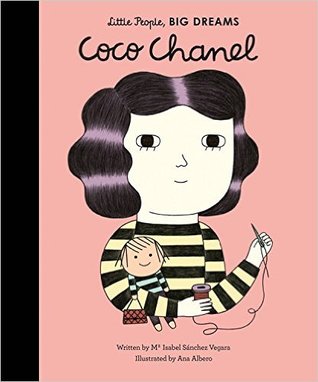
Little People, Big Dreams Titles:

Everything Else:

Note: Another week of almost exclusively picture books. I need to catch up on a lot of my other reading, but neither the energy or time is there right now.

I’m doing better than usual with books with diverse main characters and books by diverse authors, but own voices titles are still woefully behind. Stats:

  • 48 Books Read This Week
    • 30 Books with Diverse Main Character (63%)
    • 26 Books by Diverse Authors (54%)
    • 7 Books by Own Voices Authors (15%) (to the best of my knowledge)

This week’s reading highlights:

Michala’s Reading

Note: I had 2 actually well attended Teen Programs this week and read very little. But I am actually planning on making a real post again about the program win so yay!

1 9 10 11 17