Tag Archives: reading

Book Review Tuesday

Lots of great books this week! Read the book reviews below, and learn more about my favorite reads:

Black Brother, Black Brother

Black Brother, Black Brother by Jewell Parker Rhodes
Gr. 4-7. Donte and his brother Trey attend the same elite, private middle school. But, when they first started, most of their classmates didn’t recognize that they were brothers. Trey takes after their white dad, with light skin. Donte takes after their black mom, with dark skin. Trey is loved by everyone. Donte is, at best, tolerated, and, on the bad days, Donte is bullied by his peers and feared by his teachers. After getting sent to the principal for something he didn’t do, Donte gets frustrated and throws his backpack. Donte was just mad, didn’t hurt anyone, and didn’t intend to hurt anyone–but his principal called the police anyway. Suddenly, Donte is in jail, is suspended from school, and has a court date.

Donte is frustrated, alone, and confused. He decides to confront the school’s bully–“King” Alan on Alan’s turf–fencing. Donte discovers that a past Olympic fencer works at the local Boys and Girls Club. After some convincing, Donte has a fencing coach, and eventually a team, that teach him how to fence, how to be part of a team, and how to live with and fight against the racism he is surrounded by.

A good story that will appeal to sports fans. (with a great introduction to fencing). Donte’s character development is well written, though it does follow predictable patterns. I hope there might be more in this universe someday, as I wouldn’t mind hearing from Donte’s teammates or even from his brother’s perspective.

40924225. sx318

Brown Boy Joy by Thomishia Booker (picture book)
Gr. PreS-K. Brown boys are beautiful, amazing, and happy. Features brown boys finding joy in everyday activities. Recently featured on Netflix’s Bookmarks.

An adorable, simple, and necessary read. Features a black boy in a wheelchair as well as different family makeups, including two moms. Great addition to any collection.

38724576. sy475

Count Me In by Varsha Bajaj
Gr. 4-5. Karina’s biggest worries are what photo she will pick for the upcoming photography competition and if Chris, the boy next door, is as much of a jerk as the kids he hangs out with. When Karina’s grandfather moves in and starts tutoring Chris in math, Karina and Chris slowly become friends. Suddenly, Karina’s quiet world is turned upside down when Karina, her grandfather, and Chris are violently attacked. This hate crime puts Karina’s grandfather in the hospital, and both Karina and Chris are trying to wrap their heads around what happened and what they can do next.

This was good. Dually narrated by Karina and Chris, there was merit to both of their voices, though I personally liked Karina’s voice a bit more. I was always a bit hesitant with Chris–I like hearing his thoughts as he grows, but there was also a lot of pity sent his way for also surviving the attack. While he was there, Chris is white. If he had happened to have been walking alone that day, nothing would have happened to him. He was also a victim, but it’s different. I wish that element had been fleshed out a bit more.

The overall message is a good one, even if I wish this had been a bit more nuanced. Will be recommending.

40720675. sx318

Grandmother School by Rina Singh (picture book)
Gr. 1-2. In Phangane, a remote village in India, grandchildren walk their grandmothers to a special grandmother school. As children, these grandmothers watched their brothers go to school. As mothers, they sent their own children-sons and daughters-to school. Now, as grandmothers, they are finally learning to read and write themselves.

Wow! Told from the perspective of a granddaughter, this beautiful book tells the story of real women in India who are grasping their chance to learn to read. Great choice for an elementary read aloud.

52754098. sx318 sy475

Harlem Grown: How One Big Idea Transformed a Neighborhood by Tony Hillery (picture book)
Gr. PreS-K. Young Nevaeh’s school is across from an abandoned lot, or, as she calls it, the haunted garden. This haunted garden is filled with trash, until the day a visitor, adult Tony Hillery, comes to their school and decides to help. Soon, with the help of the students and the community, the haunted garden is a real garden filled with beautiful plants and growing food.

An inspirational true story in an easy-to-read picture book format. Great choice for preschoolers interested in gardening or as a tool to inspire young kids to participate in a community gardening initiative.

51344290. sx318

Hello, New House by Jane Smith (picture book)
Gr. PreS. Callie and her family move from their old home in the city to their new home by the beach. While some of her belongings are familiar (old bed, old blankie, old towel), a lot of things are new (new sounds, new shadows, new weather). Could there also be a new friend?

Simple story to ease a child into moving away from home. Though if you aren’t moving to a house on the beach, maybe this will give kids unrealistic expectations? (Perhaps I’m just jealous.) Features a diverse family.

52429268. sx318 sy475

Jack and the Beanstalk by Carly Gledhill (board book)
Gr. PreS. Simplified retelling of Jack and the Beanstalk. In this version, Jack is retrieving items the giant stole from his family. (Jack is not a thief stealing items from the giant.)

I appreciate that this series of fairy tale board books features diverse characters, though these may have worked better as picture books. The illustrations are quite detailed and small in board book format. The choice to have this story take place in a city is original, but I also question the author’s motive (Jack appears to be black and now lives in a city–is he pictured in a city because he is black?). The story is a good introduction to the fairy tale, though its simplicity leaves a lot of things unanswered (like how the giant was able to steal Jack’s items without a beanstalk, but cutting down the beanstalk makes the giant go away forever). 

16000080

Move by Elizabeth Verdick (board book)
Baby. Babies move in many different ways! This short board book contains alternating pages, half with brightly colored descriptions and half with black and white photographs of diverse babies. Most descriptions include actions that are easy to do with a baby (push, scoot, climb, bounce). Physically, this board book is smaller than usual, though it would still work well in a virtual storytime setting. My copy is in both English and Spanish, making this title more accessible. Includes movement tips for caregivers on the last few pages.

42049760. sx318

Ruby’s Birds by Elizabeth Verdick (picture book)
Gr. PreS-K. Ruby’s neighbor, Eva, introduces her to bird watching in Central Park. Ruby learns how to stay quiet and still, move carefully, and pay attention looking for tiny movements in the leaves. Later, Ruby teaches her family the tricks she has learned, and they spot a rare bird together.

A great book to pair with the free Merlin Bird ID app during a STEM storytime. Includes back matter about how to find birds in your neighborhood or city as well as information on birds you might have seen in the book and that you might also find near your home.

50211836. sx318

Sharko and Hippo by Elliott Kalan (picture book)
Gr. K-1. Sharko and Hippo are excited for a fun day of fishing! But every time Sharko asks Hippo for an item, Hippo gives him something else–instead of a boat, Hippo hands Sharko a goat. Instead of a pole, a peel and a pail. Instead of keys to the car, Sharko receives cheese from a star.

Filled with humor and a bantering that is a little reminiscent of Elephant & Piggie, this funny book would work well as a conversation starter about wordplay, rhymes, and starting letters. And in the end, all of Hippo’s mistaken items were intentional–in an effort to help save those fish they would have otherwise caught.

51009988. sx318 sy475

The Three Little Yogis and the Wolf Who Lost His Breath: A Fairy Tale to Help You Feel Better by Susan Verde (picture book)
Gr. K-1. In this reimagining of the Three Little Pigs, a wolf has lost his huff and puff. The wolf spots a calm little pig doing yoga by a straw hut. All the wolf wants to do is blow the hut down. When the pig hears the wolf’s wheezing, she offers to help him get his huff and puff back through breathing exercises. The wolf continues practicing breathing and yoga poses as he meets each of the three little pigs, all eager to help.

A great fit for a yoga storytime or any storytime focused on mindfulness and emotions with perhaps a nicer, more thoughtful message than the original tale. Nice inclusion of a pig with gender-neutral pronouns as well.

49770812. sx318

Unicorns Are the Worst! by Alex Willan (picture book)
Gr. PreS. Unicorns are the worst! At least, that is what Goblin thinks. Goblin spends their days in pursuit of serious magic, collecting magical ingredients and creating spells. Goblin is not happy when unicorns move in next door with their glitter and tea parties. Why are unicorns so well loved while goblins are so underappreciated?

Funny story perfect for fans of unicorns, magic, humor, and new friendships. Bright illustrations will draw in young readers and also make this a good book to share virtually.

Book Review Tuesday

Lots of great books this week! Read the book reviews below, and learn more about my favorite reads:

Agent Moose by Mo O’Hara (graphic novel)
Gr. 2-3. Agent Moose (aka Anonymoose) recently lost his credibility after claiming the moon was moon-napped during a lunar eclipse. Instead of solving his 100th case, Agent Moose and his assistant Owlfred became the joke of Woodland HQ. To make things worse, they both have to attend Camo Chameleon’s Party–celebrating Camo Chameleon’s 100th case solved! The party isn’t all play, however–Anonymoose and Owlfred also have to track down a missing animal, Terrance Turtle, a key witness in a recent robbery (solved by none other than Camo Chameleon). But when Anonymoose and Owlfred arrive at the party and start talking to witnesses of the turtle-napping, all is not as it seems…

Another great readalike for fans of Dog Man, Agent Moose is sure to be a winner with kids looking for animal crime-solving humor. Lots of fun disguises and puns paired with cute illustrations and an easy setup for a longer series. Will be recommending.

Grandpa Grumps by Katrina Moore (picture book)
Gr. PreS-K. Daisy is so excited to meet her Yeh Yeh (grandfather), visiting from China for the first time. She has so many great ideas for all of the ways they will have fun together…but he seems really grumpy. Daisy is about to give up on getting a smile from him before he goes home, when the two finally bond while cooking together.

Adorable depiction of family dynamics, especially when cultural differences are added to the mix. Sweet ending that may invite a welcome sequel.

I Am Brown by Ashok K. Banker (picture book)
Gr. PreS-1. Gorgeous! Stars brown children from around the world showing all of the different, amazing things that they do, the clothes they wear, the places they are from, the languages they speak, and more. Vibrant, warm colors keep the reader engaged. Holds a wonderful, uplifting message about the normalcy and awesomeness of being brown.

I Love Us: A Book About Family by Luisa Uribe (board book)
Toddler-PreS. Board book depicts various families having fun together. Features diversity in skin color and family makeup (kids raised by grandparents, single parent homes, possibly a family with two dads (not clear)). I would’ve preferred this book in a larger, picture book format, as the words and detailed illustrations would work well for a preschool storytime. Includes a mirror at the end, followed by a blank family tree encouraging readers to add the names of people they love.

In the Garden by Emma Guiliani (nonfiction)
Gr. 1-3. Siblings Plum and Robin explore and take care of their garden all year long. This physically giant book is filled with flaps for additional learning, letting readers see inside of fruits and flowers and get a peak underground. Plenty of interesting info on what tasks need to be completed in a garden during each season as well as how plants grow. Rare nonfiction book starring diverse kids.

Internet Animal Stars by Rebecca Felix (nonfiction)
Gr. 1-2. Simple facts about various animals, with a focus on their Internet popularity.

While this series is cute and definitely has cover appeal, I do wonder about their longevity. Animal facts are sparse, with not quite enough details to cover the required information for the average animal project. The design has a definite rainbows-and-cuddles Lisa Frank vibe without looking too dated (for the current moment anyway). I’m not sure how long that style, or the chapter starring animal memes (“meme break!”), will stay relevant. Still, it is pretty darn cute.

Jake the Fake Keeps His Cool by Craig Robinson and Adam Mansbach
Gr. 4-5. Jake’s mom is pregnant! Jake isn’t sure what this means for him–will his parent’s stop paying attention to him now that he will be the middle child? Will the baby keep him up all night? Will Jake have to share his room? Jake quickly gets distracted by a new, pretty classmate that Jake is desperate to impress, even if that means stretching the truth about his cooking and haircutting skills.

I still enjoy this series, even if neither sequel reached quite the same hilarity as the first book. This book felt a little more disjointed than previous titles in the series, with the baby storyline only appearing when it needed to make a point. Even with that, I appreciate any own voices books that are great readalikes for fans of Wimpy Kid and Big Nate.

Leap Frog by Jane Clarke (picturebook)
Gr. PreS-K. Tiny Felix Frog is trying to make his way home across the jungle. Along the way, he runs into a variety of rainforest critters whose unique sounds make Felix jump! Help Felix make his way home by counting, bouncing, and repeating phrases before turning each page.

Vivid illustrations with bright colors make this a storytime standout. Turn the animal-sound reveals into a guessing game for preschoolers or kindergarteners, especially if paired with a non-fiction rainforest or jungle animal title.

Mia Mayhem and the Super Family Field Day by Kara West (first chapter book)
Gr. 1-3. Mia Mayhem finally gets to see her superhero parents in action when her Program for In Training Superheroes (the PITS) hosts a family field day. Mia knows everything is for fun, but she really would like to win that trophy…

I adore the Mia Mayhem series SO MUCH. At their heart, these are well-written, fun first chapter books combining superhero antics with everyday elements of growing up, including friendship struggles, balancing home and school, overcoming challenges, wanting to win, and more. The diversity in our young superheroes is unparalleled, with Mia having close friends of not just different races, but a friend who is blind (with a super guide dog) and a friend who has two prosthetic legs. We learn in this book that one of her friends has two dads. And its all so seamlessly included in the text that this series is far from issues books–they are just kids in everyday (superhero) situations.

Mummy, What’s In Your Tummy? by Bernadita Romero (board book)
Toddler-PreS. In this board book, a child imagines what might be growing in his mummy’s tummy. Originally published in Chile in Spanish and translated to English. I wonder if the translation has to do with the inclusion of a whale as one of the animal guesses–a logical guess for a small child, but maybe not a word every expecting mom wants to use to describe her belly? (Or an elephant for that matter…) Diverse family featured throughout.

Rockin’ Rockets: The Adventures of Allie and Amy by Stephanie Calmenson (first chapter book)
Gr. 2-3. Allie and Amy are are inseparable, until new girl Gracie moves into their neighborhood. Gracie doesn’t want to come between Allie and Amy, but when Gracie is only allowed to have one friend over at a time, she is forced to choose. When Gracie accidentally promises both Allie and Amy her extra ticket to the Rockin’ Rockets concert, suddenly Allie and Amy are fighting over who gets to go, and their status as best-friends-forever is in question.

The Allie and Amy series is cute, if a little shallow. I appreciate the diverse friend group and that the girls live in apartments (something not often shown in kid’s lit). I wish their friendship struggles had been more fleshed out in this book, as these kinds of fights do happen in real life, and they aren’t often resolved by getting an additional free ticket because your other neighbor just happens to be the mysterious new drummer in your favorite band. A good readalike for the more nuanced Craftily Ever After and Miranda and Maude series.

Row, Row, Row Your Boat: Sing Along with Me! by Nosy Crow (board book)
Baby-Toddler. Cute, though short, board book adaptation of the song Row, Row, Row Your Boat. The chunky sliders and pull tabs will appeal to babies and toddlers and are sturdy enough for repeated circulation. I prefer Jane Cabrera’s adaptation for storytime purposes, as it has very similar verses with larger, less dense illustrations. The interactivity and small details make this ideal for a one-on-one reading.

Séance Tea Party by Reimena Yee (graphic novel)
Gr. 4-5. Lora feels left out as all of her friends seem to be growing up without her. Lora doesn’t want to grow up, and she is thrilled to discover a new (though also old) friend living in her house. Ghost girl Alexa is around Lora’s age, haunting Lora’s house and just looking for a friend. The two become inseparable even as Lora begins to grow up on her own, and Alexa grows more and more curious about the past that she can’t remember.

Beautifully illustrated and filled with all the feels, Séance Tea Party is a sweet story about how friendships change, what it means to grow up, and keeping the magic of childhood alive. Be prepared for a bittersweet, authentic ending that may leave you tearing up.

Speak Up by Miranda Paul (picture book)
Gr. PreS-K. When you see something that doesn’t feel right, when you make a mistake, when you can help someone in need, use your voice and speak up!

While this book’s message is simple, it approaches kindness, activism, and using your voice in a tone perfect for preschoolers, kindergarteners, and first graders. The book shows real situations kids may face in school such as a teacher mispronouncing a classmate’s name, kids spreading rumors that mud on a child’s pants is really something else, litter covering the playground, classmates goofing around, and more. A diverse class reflects the faces of real kids who spoke up and made a difference, as shown in the last few pages along with brief information on how those kid’s made a difference in the real world. Perfect choice for a kindergarten storytime.

Target: Earth (Klawde, Evil Alien Warlord Cat) by Johnny Marciano and Emily Chenoweth
Gr. 3-4. Klawde,–the Evil Alien Warlord Cat from Planet Lytterbox trapped on Earth as punishment–is moving on to another evil scheme. Klawde has decided to take over his new home–Earth. Using the technology skills of his evil minion cat, Klawde programs a new cybercurrency, Kitcoin, and uses his new wealth to buy virtual reality headsets that allow him to control Earth’s squirrels. Combine those headsets with a dozen or so satellites, and Klawde is on his way to world domination. Except, humans aren’t quite as easy to conquer as Klawde might believe.

Ridiculous and funny, this is a perfect step-up series for fans of Dog Man, Captain Underpants, and even Diary of a Wimpy Kid. The balance of Klawde’s evil villain commentary and Raj’s everyday concerns (and fear of and love for his all-powerful cat) keep reader’s engaged and eager to know what will happen next. Cute messages about friendship and technology make this series feel a little preachy, but that is easily pushed aside when paired with Klawde’s pure villainy. Looking forward to many more Klawde adventures.

Book Review Tuesday

Lots of great books this week! Read the book reviews below, and learn more about my favorite reads:

Happy reading!

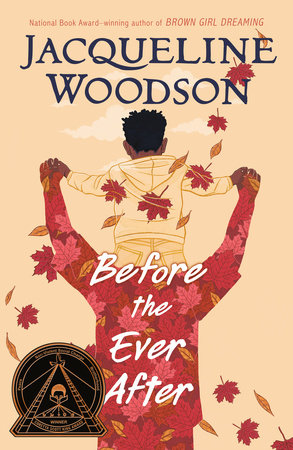
Before the Ever After by Jacqueline Woodson: 9780399545436 |  PenguinRandomHouse.com: Books

Before the Ever After by Jacqueline Woodson (novel in verse)
Gr. 4-7. ZJ’s football star dad isn’t his hero–he’s just ZJ’s beloved dad. Lately, ZJ’s dad struggles to remember things and sometimes gets really angry. ZJ’s mom explains that the memory loss has to do with all the head injuries and hits ZJ’s dad took during his professional football carer. The doctors can’t seem to help, and ZJ is scared of losing his dad forever.

Wow. This is an incredible book, told in verse, where, with such raw emotion. ZJ shows that the “ever after” isn’t always happy and life isn’t always okay. I hope this one receives lots of recognition at the youth media awards.

Dear Sweet Pea: Murphy, Julie: 9780062473073: Amazon.com: Books

Dear Sweet Pea by Julie Murphy
Gr. 4-5. Sweet Pea is trying to figure out what her new life looks like. She still lives in her small town in Texas, but her parents don’t live together anymore. After the divorce, her dad moved in right next door, meaning Sweet Pea has two nearly identical houses, with nearly identical bedrooms. That isn’t all Sweet Pea has to think about–there is also her ex-best-friend who has moved on to prettier and skinnier new friends, a possible first crush, and the reason for that divorce, that her dad realized he’s gay.

When Sweet Pea’s eccentric neighbor, Miss Flora Mae, has to go out of town, she leaves Sweet Pea with a job: collect the letters Flora Mae receives from the newspaper and send them along to Flora Mae’s temporary address. Flora Mae is the town’s one and only advice columnist, and she wants to keep her trip a secret. Sweet Pea is excited by this new project, but when she finds a letter to Flora Mae from Sweet Pea’s ex-best-friend, Sweet Pea can’t help but reply to the letter herself.

Sweet Pea is an amazing kid, and an excellent, honest protagonist. I felt and understood every one of her decisions, even when I knew they would end badly. (I would have probably made the same decision if I had been caught in Sweet Pea’s sleepover dilemma.) This book is particularly wonderful because of its fat girl representation. Sweet Pea is fat, plain and simple, but this isn’t an issues book. Fat girl issues are mentioned, such as trying to find cute clothes in larger sizes and a fear that her old friend, Kiera, has moved on to skinnier friends. But the book isn’t about these things. There is a sense of self-acceptance in the book, but not about her weight, because Sweet Pea accepts and loves herself before this book even begins. Refreshing and sweet.

Amazon.com: Kodi (Book 1) (9781603094672): Cullum, Jared: Books

Kodi by Jared Cullum (graphic novel)
Gr. 2-3. During a summer stay with her grandma, Katya struggles to make friends until she rescues a hurt Kodiak bear. Affectionately named Kodi, the bear and Katya quickly become inseparable. When Katya has to return home early, both Katya and Kodi are heartbroken. Kodi is determined to be reunited with his friend, stowing away on a cruise ship and traversing the streets of Seattle until he finds Katya once again.

A sweet and quiet read, this graphic novel focuses on friendship and perseverance. Great for younger readers and fans of books about kids and their dogs.

Amazon.com: Snow Place Like Home (Diary of an Ice Princess #1)  (9781338353938): Soontornvat, Christina: Books

Snow Place Like Home (Diary of an Ice Princess) by Christina Soontornvat (first chapter book)
Gr. 2-3. Princess Lina loves her magical life living in castle in the clouds, but she also dreams of doing regular things at a Groundling (human) school with her best friend Claudia. Lina convinces her parents to let her try out human school, but Lina still doesn’t have control of the wind powers she inherited from her mom. Whenever she feels strong emotions, Lina tends to make ice and snow appear in the world around her…and that ice and snow have followed her to her new school.

I read this series entirely out of order, though I am very happy to finally make it to the first book. This series is simply fun–with a great combination of humor, everyday school adventures, magic powers, and a lovely message of self-acceptance. Plus, this series stars a biracial main character, is written by a diverse author, AND is a fantasy series–a combination very hard to come by in first chapter books. Recommending to anyone and everyone.

Heroes Wear Masks: Elmo's Super Adventure (Sesame Street Scribbles): Sesame  Workshop: 9781728236599: Amazon.com: Books

Heroes Wear Masks: Elmo’s Super Adventure by Ernie Kwiat (picture book)
PreS-K. Elmo is about to start school, and his mom helps him prepare with tips about staying calm, handwashing, and mask wearing. More details and suggestions in the back for caregivers.

This is exactly what you would expect from Sesame Street, and a book that I’m sure is needed right now. Elmo sets a great example for kids everywhere, wearing his mask, keeping six feet from his friends, and still managing to have a great day at school.

Amazon.com: ¡Brilla, brilla, pañalito! / Twinkle, Twinkle, Diaper You!  (Spanish and English Edition) (Small Talk Booksƒƒ‚ƒƒ‚‚&#) (9781595728944):  Ellen Mayer, Ying-Hwa Hu, Ying-Hwa Hu: Books

Twinkle, Twinkle, Diaper You! by Ellen Mayer and Ying-Hwa Hu (board book)
Baby. Mama changes baby’s diaper in this simple board book. While the action is straightforward, the book excels in modeling ways a caregiver can turn a small exchange, like changing a diaper, into a literacy-development experience by singing a modified version of Twinkle Twinkle Little Star, practicing animal sounds, identifying body parts, and more. Bonus points for featuring a diverse family.

Book Review Tuesday

You might have noticed from our weekly It’s Monday! What Are You Reading? posts, but I read a lot. I don’t typically read as much as I have been during pandemic times, but I have recently thrown myself into reading even more than usual. For a few months, I’ve been interested in writing brief reviews of some of the books I read, but I don’t want reviews to affect my reading pace. I like recording my thoughts about titles that really stand out to me, but I don’t feel a need to recreate a publisher summary for every book I’ve read this week.

Personally, I really appreciate It’s Monday! What Are You Reading posts to find new books that I haven’t heard of, so I don’t want to limit the number of books shared on my Monday posts. This has led me to a new feature for Book Cart Queens–Book Review Tuesdays.

Book reviews are going to be brief, focusing on what I want to remember and books that stand out to me (these don’t replace professional reviews by any means).

Happy reading!

Class Act by Jerry Craft (graphic novel)
Gr. 5-7. New Kid was my dream Newbery winner, and the sequel does not disappoint. Readers get more detailed glimpses into the lives of Jordan, Liam, and especially Drew, with even a touch more character development from Andy. Drew takes center stage here, with a different perspective on his classmates than Jordan. So many real issues are discussed in ways that never feel preachy, with Craft’s appealing artwork balancing humor and reality (race, bullying, class differences, microaggressions, friendship, and more). Hoping for more books in this universe. Read as an eARC.

Amazon.com: Mary Had a Little Glam (Volume 1) (9781454932857): Sauer,  Tammi, Brantley-Newton, Vanessa: Books

Mary Had a Little Glam written by Tammi Sauer and illustrated by Vanessa Brantley-Newton (picture book)
PreS-K. Vanessa Brantley-Newton’s illustrations shine here, bringing young Mary to life. Brantley-Newton sprinkles in details from nursery rhymes and fairy tales, going beyond the written words to add humor and a bit of sass to young Mary’s fantastic outfits (the sheep crossbody purse is my favorite). Between the fun illustrations and the rhythmic beat, there is a ton of storytime potential packed into this title.

I Am Not a Label: 34 disabled artists, thinkers, athletes and activists  from past and present: Amazon.co.uk: Burnell, Cerrie, Baldo, Lauren Mark:  9780711247444: Books

I Am Not a Label: 34 disabled artists, thinkers, athletes and activists from past and present written by Cerrie Burnell and illustrated by Lauren Mark Baldo (nonfiction, biography)
Gr. 3-5. This gorgeously illustrated collective biography features the stories of 34 disabled individuals who are artists, musicians, athletes, innovators, activists, and more. While there have been a plethora of collective biographies in recent years, this one’s focus on people with disabilities (a group very underrepresented in children’s books) is refreshing, along with its well thought out collection of diverse people from around the world with a variety of types of disabilities.

Nana Akua Goes to School: Walker, Tricia Elam, Harrison, April:  9780525581130: Amazon.com: Books

Nana Akua Goes to School by Tricia Elam Walker and April Harrison (picture book)
Gr. 1-2. Zura is nervous about bringing her Nana Akua to school for Grandparent’s Day. Nana Akua is Zura’s favorite person in the world, but Nana Akua also has tribal markings on her face from a family tradition from her childhood in Ghana. Sometimes, those marks scare strangers when Zura and Nana Akua go to the park or the store. What will Zura’s classmates think?

Zura’s nerves won’t feel unusual to children hesitant to share their own familial differences with their classmates. The blend of designs and patterns in the artwork make this story shine, helping teach readers about empathy and accepting people’s differences.

Dog Man: Grime and Punishment: From the Creator of Captain Underpants (Dog  Man #9) (9): Pilkey, Dav, Pilkey, Dav, Pilkey, Dav: 9781338535624:  Amazon.com: Books

Grime and Punishment (Dog Man 9) by Dav Pilkey (graphic novel)
Gr. 2-4. I’m a Dog Man fan through and through. Dav Pilkey never ceases to amaze with the themes and messages he can pack into a series that is considered by so many to be slapstick superhero books. Petey’s character progression-from standard villain to caring papa-is a personal favorite, and the newest title doesn’t disappoint with lessons about forgiveness, love, and happiness as well as an ending that left me a little teary eyed. Looking forward to Book 10 and excited to keep recommending this series to young readers.

2020 Mid-Year Review: What Am I Reading?

You might have noticed from those What Are You Reading? posts that I read. A lot. I read a lot of picture books (which I know many people don’t count in reading totals). I also read a lot of graphic novels, which can generally be considered “faster” reads than chapter books. But, even with those considerations, I know I read a lot.

I’m privileged in the time I can dedicate to reading–I only work one job and reading is directly related to that job (though not something I really ever get to do on the job). My job gives me easy access to free books, without having to go out of my way to pick them up or even to track down a list of new releases. I don’t have kids or the responsibilities that come up with taking care of young people. Even though I go through slumps, I genuinely enjoy reading. And I’ve had particularly a lot of time for it during the pandemic.

I pride myself on reading books featuring diverse characters. I didn’t really do this as a child, beyond the books that won awards or were regularly in recommendations from school and public librarians. I didn’t think about what the characters in my books looked like until I started library school. (More privilege. I’m just chock-full of that.) I had some pretty phenomenal professors that pointed my head in the right direction, and since then, especially in that last few years, I’ve been making a conscious effort to read diverse kids books.

I know that I’ve made a specific effort to book talk titles featuring diverse characters–though, now that I look again at my process, 3/9 isn’t as high a ratio of diverse books to white/non-human books as I would like. Especially when I put the research in and discover that two of those three books are written by white authors. I’ve been trying to correct that by focusing exclusively on own voices in more recent video book talks — but I’ve already felt the itch to book talk a non-own voices book, and I’m afraid once I open myself to that, I’ll once again not promote own voices books as much as I should.

I also know that my storytimes do not feature enough diversity. I tend to blame this on my typical age group–babies–and the overall lack of books that I really feel is ideal for those wiggling one-year-olds. While the industry definitely has issues, that lack of diversity in my storytimes is squarely on me, and something I’m looking at.

So what is this post about? I want to look at what I’ve actually read so far in 2020.

If anyone has a recommendation on how to do this that is simpler than creating a spreadsheet and reviewing each title one at a time, please let me know. I mark a lot of these things through Goodreads shelves, though, for reasons I do not understand, Goodreads will not show me all of the books I read this year in a way that was easily sortable–it kept dropping off the last 100, which left me with incomplete data.

My own voices data is particularly questionable, as it is subject to searching for a Google image of an author I wasn’t sure of, and then going to their author website if I still wasn’t sure, or if I was genuinely surprised by their whiteness (more often than not unfortunately). I’m hoping to rectify this by making this a more regular effort instead of trying to quickly sort 720 books in one weekend.

Some of the data doesn’t quite add up the way you would imagine, as some books are in multiple categories. For example, there are some picture books and graphic novels also tagged as non-fiction titles.

The breakdown is below.

Mid-Year 2020 Reading Statistics

  • Format/Intended Age:
    • 329 Picture Books (46%)
      • 129 diverse main characters (39% of picture books)
    • 191 Graphic Novels (27%)
      • 44 diverse main characters (23% of graphic novels)
    • 80 First Chapter Books (11%)
      • 45 diverse main characters (56% of first chapter books)
    • 50 Beginning Readers (7%)
      • 20 diverse main characters (40% of beginning readers)
    • 34 Juvenile Fiction Chapter Books (5%)
      • 13 diverse main characters (35% of juvenile fiction)
    • 8 Teen Fiction Books (1%)
      • 4 diverse main characters (50%)
    • 4 Adult Fiction Books (0.5%)
      • 0 diverse main characters (0%)
  • Fiction/Non-Fiction/Genre:
    • 66 Non-fiction (9%)
      • 29 contain diversity in “characters” (picture books/graphic novels teaching facts), biographies, memoirs, or focus on racism (44% of non-fiction)
    • 19 Biographies (3%) (also included in NF)
    • 653 Fiction (9%)
      • 231 contain diverse main characters (35% of fiction)
  • Author Makeup:
    • 475 Books Written By Female Authors (66%)
    • 238 Books Written By Male Authors (33%)
    • 153 Non-White Authors (21%)
  • Diversity:
    • 260 Diverse Main Characters (36%)
    • 132 Diverse Main Characters Written By Own Voices Authors (18%)
    • 28 LGBT Main Character (4%)

Breakdown: Format/Intended Audience

  • 329 Picture Books (46%)
    • 129 diverse main characters (39% of picture books)
  • 191 Graphic Novels (27%)
    • 44 diverse main characters (23% of graphic novels)
  • 80 First Chapter Books (11%)
    • 45 diverse main characters (56% of first chapter books)
  • 50 Beginning Readers (7%)
    • 20 diverse main characters (40% of beginning readers)
  • 34 Juvenile Fiction Chapter Books (5%)
    • 13 diverse main characters (35% of juvenile fiction)
  • 8 Teen Fiction Books (1%)
    • 4 diverse main characters (50%)
  • 4 Adult Fiction Books (0.5%)
    • 0 diverse main characters (0%)

I know I read a lot of picture books, and those inflate my overall reading count for the year. I am pleasantly surprised that picture books only make up 46% of my reading for the year (though when I include the similarly-sized Beginning Readers, those types of books make up a combined 52% of my reading so far this year). I’d like to continue to try to keep my picture book reading to under 50% of my overall books for the year, to make sure I am digging into those older age ranges.

Graphic novels have become my comfort zone, particularly for the speed I can read them and their popularity with our patrons. Next time, I would like to break this number down further with the age range the graphic novels are aimed at. I’d like to hold this count steady around 25% of my reading.

During quarantine, I made a particular effort to increase the first chapter books I read, particularly diverse titles. I think that is reflected here. Even with first chapter books being only 11% of my total reading for the year that is much higher than previous years (based on my knowledge of my reading not any formal stats).

These three areas are my weakest reading age ranges

  • Beginning Readers: I struggle with these because I love a good story, and these are not written with the “good story” angle in mind.
  • Juvenile Fiction: I knew my juvenile fiction chapter books have been weak this year, but ouch. Only 5% of my reading has been traditional chapter books–I’m going to work on that.
  • Teen Fiction: If I thought my middle grade reading was low, teen books are abysmal. Though, I will try to defend this a little because at least 30% of those graphic novels are for teens. I don’t program for teens, and we don’t get as many reader’s advisory questions, and…I’ve let this age range slip. Badly. (Michala go write a teen book blog post!)

The second piece of this category I wanted to examine was diverse main characters at the format-level.

While the wait for census numbers will probably take much longer than usual due to the pandemic, the projections for 2020 have remained the same for years: the expectation is that of children in the US (under the age of 18), 49.8% will be “non-Hispanic White.” My reading reflects the books I talk about and share, and my reading needs to, at a minimum, reflect the races of kids today too. I would like to have each of these categories be comprised of at least 50% books featuring diverse main characters.

That isn’t going to be easy–the majority of books published are very white-centered or animal-driven, and while that has been improving a little, it hasn’t improved to the point of enough new titles to necessarily let me increase my reading across these categories without intentionally not reading any other books in those categories. I also need to realistically consider what my reading will look like post-working-at-home. Fifty percent in each category is not likely to happen this year–but maybe it can happen in one or two categories this year, and more over the next few years.

Next Steps:

  • Continue reading any diverse picture books and first chapter books I can access.
  • Actively look for more diverse beginning readers and graphic novels. These are two areas that I’ve always felt are weak proportionately in diversity, at least in my library. Dig harder here.
  • Read more juvenile fiction chapter books, focusing on diverse titles. There have been 10 beside my bed for a week. Actually read them.

Breakdown: Fiction/Non-Fiction/Genre

  • 66 Non-fiction (9%)
    • 29 contain diversity in “characters” (picture books/graphic novels teaching facts), are biographies or memoirs, or focus on racism (44% of non-fiction)
  • 19 Biographies (3%) (also included in NF)
  • 653 Fiction (91%)
    • 231 contain diverse main characters (35% of fiction)

I don’t like non-fiction. Sorry world. I never enjoyed reading non-fiction as a child, and I very, very rarely do as an adult.

Since I struggle with non-fiction (and biographies) so much as it is, I’m going to try to make sure that the books I do read include diversity. I have a tendency to only read non-fiction books about animals, and I want to shift that towards more biographies and memoirs. Poetry is wrapped up in non-fiction too, and while I don’t think I will ever actively enjoy poetry, it is very easy for me to commit to reading diverse poets and generally avoiding white ones.

I can’t even out all of my reading percentages, and this is one that, while I know it is an issue from a reader’s advisory perspective, I am going to set aside for now, though keep it in the back of my mind. I will keep an eye out for reading lists containing great diverse non-fiction for kids, and try to focus on those.

Next Steps:

  • Keep an eye out for more diverse non-fiction titles.
  • Read more biographies – increase biographies read during the year to at least 6%.

Breakdown: Author Makeup

  • 475 Books Written By Women Authors (66%)
  • 238 Books Written By Male Authors (33%)
  • 153 Diverse Authors (21%)

Again, I have to choose what I want to work on, and I’m going to let my female-male breakdown go. I’m reading more books by female authors than male authors. I would like to dig into non-binary authors and authors that identify as multiple genders (and, honestly, some of the authors on my list may do that–this was not the best researched spreadsheet).

I do need to focus on reading books by diverse authors. I’ll get into this more in the next section, but the disproportion between books I’ve read written about diverse kids and books written by own voices authors is alarming. (Only half of the diverse main character books I read this year are by own voices authors! Half!) Having 21% of my reading reflect books written by diverse authors is a start, but it is far from where I would like to be. I want to focus heavily on that number during the second half of this year.

Next Steps:

  • Read more books by authors who are non-binary or identify as multiple genders. Not really examined here, but read more books by transgender authors too.
  • Read more books written by diverse authors. Aim to get that percentage to at least 33% by the end of the year.

Breakdown: Diversity

  • 260 Diverse Main Characters (36%)
  • 132 Diverse Main Characters Written By Own Voices Authors (18%)
  • 28 LGBT Main Character (4%)

These were the numbers I was really looking for. I’ve been actively seeking out books with diverse main characters, so I’m glad this number was a bit higher than I expected when I started looking at titles (but not as good as I secretly hoped). This is exactly why I need to actually look at the data though–because if I had to make a guess a month ago, I probably would have said that 40-50% of what I read is diverse, and that is not the case.

The real rude awakening for me, particularly over the last few weeks, has been how many books featuring diverse main characters are written by white authors. That hurt because, in the fake world in my head, I had assumed that the increase in books featuring diverse characters, that I was seeing and reading each year, also meant more diverse authors were getting published. This has never been true, and while the information was right there for me to find, I naively believed otherwise for far too long.

I’ve noticed the own voices dilemma in my own reading and book talking as I’ve started to make virtual book talk videos, focusing on own-voices titles. So many books I recommend regularly or put on displays–Bad Babysitters, Sanity and Tallulah, Zoey and Sassafras, Molly Lou Melon, Lola and Leo, Jabari, Emma on the Air, Katie Woo, and so many more–are all by white authors. Some have connections to the community they write about–the author of Emma on the Air is married to a man from the Dominican Republic and has two mixed children–but it isn’t the same.

I need to do more research when selecting books to read, and make more of an effort to read those books actually written by own voices authors. The other books can be good too, but the own voices books need to take priority.

Next Steps:

  • Prioritize–in reading, book talking, and dispalying–books by diverse authors featuring kids that look like them.
  • Increase the amount of books read by own voices authors to at least 25% by the end of 2020.
  • Increase the amount of books featuring LGBT characters to at least 8%.

Final Thoughts

Overall, these numbers weren’t as bad as I expected but also weren’t as good as I secretly hoped.

I’m interested to revisit this at the end of the year and see where these numbers end up. I like creating specific steps to move toward my goals, but I also tried to ground my goals in smaller increases because, once I go back to in-building work full time, my amount of reading overall will decrease. I can also tell that I am starting to hit a reading roadblock–I keep trying to push through, but I can already tell it is much harder for me to get through a chapter book than a faster picture book or graphic novel right now.

There are so many more elements of my reading I could examine. How does my reading breakdown over typical genre lines? How does diversity breakdown over genre lines? How about male vs. female main vs. non-binary main characters? I really didn’t dig into LGBT characters and authors as much as I could have here. This list focuses on the books I’ve read this year–can I examine what I used in storytime? What books I book talked or used in programs? All the books I’ve ever read?

This is a new process for me, and a daunting one, though necessary. How do you examine your reading? How do you keep track of what you do–and don’t–read enough of?

ALA Midwinter Book Haul

Last week, I had the pleasure of attending the ALA Midwinter Conference in Philadelphia. This was my last required conference as chair of the 2020 Notable Children’s Recordings Committee. I spent most of the conference in long meetings, but during my few hours of free time I wandered the exhibit floor.

I love books–they are what started me down the library path, even if my love of helping people kept me there. I wander the exhibit floor with committee members who talk about how they are over the free books, and my brain isn’t able to process that (even if my back understands preferring a lighter suitcase). The books ultimately go to our patrons, but I want to read them too (and first darn it because my back is the one that lugged them home). I am also the person who has approximately 150 holds at any given moment–because I am genuinely excited to read the books and to be able to regularly recommend new, exciting, awesome books to my patrons. I read about 600 books a year–and maybe a fifth of those come from conferences.

I am thrilled to share the load I brought back with all of you! All titles are linked below the pictures, roughly sorted by age.

Picture Books

I tend to not pick up that many picture books as the ARCs are typically quite flimsy, making it hard to give them to patrons. Everything I picked up this round were already released titles (plus the Golden Girls book).

Non-Fiction

There typically aren’t too many non-fiction titles at conferences, but I was surprised that I only picked up two.

Beginning Readers & First Chapter

These lean much more “first chapter” age than “beginning reader” age. I’m particularly excited for Pizza and Taco and Fox & Rabbit.

Kids Graphic Novels

My favorite finds! I was hoping for an ARC of When Stars Are Scattered, but I am also quite excited for Doodleville (by the same author as Cardboard Kingdom) and Primer.

Kids Chapter Books – Upcoming Releases

Lots of middle grade at this conference! Especially pumped for the Twinchantment sequel, Something to Say, and Fly on the Wall.

Kids Chapter Books – Already Released

I love the last conference day, when the publishers pack up the exhibit floor, and attendees get a chance to get their hands on some fantastic brand new hardbacks of amazing upcoming and recent releases. I scored my personal copy of New Kid that way at Midwinter 2019.

Middle School Titles

Those books are listed as “10+” inside the cover and are bordering between elementary school and middle school readers.

1 3 4