My last preschool storytime (outside of specials)–possibly for a long while. If we keep with our proposed schedule for the fall and spring, other than those Saturday programs, I won’t be doing these again. This was such a fun age range. (I think I say that about all of them!)
For me, a benefit of COVID has been being able to really dig into storytimes for different ages. When I started as a youth librarian, I had very little storytime experience, and I essentially served as a substitute. I was tossed head first into Baby Storytime, which I made my own. I substituted for other ages, but I often just repeated the same program because I saw the kids so infrequently. Now that I’ve really been working with each age range, I can see the improvement across all of my storytimes, plus I have more awareness of what is appropriate for each age range.
One thing I didn’t get to explore as much as I wanted these last few weeks is diverse musicians. I am still working on this project, but as happens, especially now, deadlines keep trumping projects like these. I have been chipping away, however. I have a great lists of artists and CDs, and I am working on the listening. More soon!
When sharing a story together, take a look at the book cover. Have your child predict what the book might be about. Read them the title and see if that changes their thoughts. Take a look at the pictures inside, and see what they think.
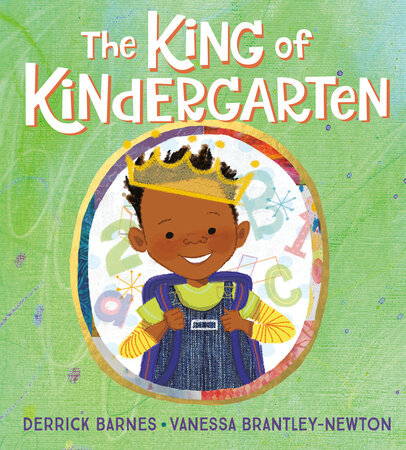
Book:King of Kindergarten by Derrick Barnes
Song: Wiggledy-Woo by Mr. Eric & Mr. Michael (No video, as we don’t need a permanent record of me dancing to this.)
Book Character BINGO! This was my first virtual event with very low attendance. I had two families play during the event, with about five more play later in the day. I think our virtual programming’s popularity is directly connected to how popular the related franchise is. Pokemon = popular. Dog Man = popular. Generic Book Characters, even with some popular ones thrown in = not so much.
Book Character BINGO Setup
This program took place on a day I was required to work in our library, so my setup is a bit different. To have a mask off, I have to be in a closed room, and my only real option was the library board room. One wall is a giant window, another is glass facing admin, and the other two are covered in framed awards and maps. I set up in front of the mini dry erase board:
This isn’t the most convenient setup, but it allowed me to have all of my technology connected and have a cute background.
I was planning to livestream from my laptop, but after all the technical issues I had during Dog Man Trivia last week, I decided to use my phone for my cellphone’s internet. Our work wifi is spotty, especially in our filming space, and the publicly circulating hotspots don’t actually work in the library (bad network coverage).
This involved a lot of technology, including:
Phone on tripod with phone mount for livestreaming
Laptop for watching stream and responding to comments (off camera)
Speaker and iPod touch for background music (off camera)
Book Character BINGO Content
We played three rounds of BINGO, two where we aimed for five in a row, and a final coverall game.
Watch the video here:
All of the BINGO cards have the same 24 characters on them (plus the free space). I include a number beside each character image to help kids and grown-ups quickly find characters they are unfamiliar with. I also used this as an opportunity to book talk some of the characters on the BINGO cards.
My second to last preschool storytime! I’m trying to keep to the same routine, but I also feel like I want to just squeeze as much content in as I can. Starting in the fall, I’m rotating between baby and toddler programs, so I don’t know when I will see this age range again outside of themed Saturday specials (Pinkalicious, I’m coming for you!).
Generally, I ended up with too many pieces this week that were a touch too long when all put in the same program (longer book, longer song, longer retelling). Virtual attention spans are still short, even with my preschool friends.
Encourage your child to choose books they are excited about, even if you think the story is too long for their attention span or bedtime. Try a “picture walk” if you really think the book is too dense, but consider trying to read it–their patience may surprise you when they are genuinely interested.
Even though Dog Man won our last Book Tournament voting contest, and it is, without question, the most popular book series in our library, I underestimated its popularity going into virtual Dog Man Trivia. I expected a small crowd (Pokemon Trivia in June had around 55 attendees; surely Dog Man would be less). Nope. 101 people. 345+ comments. Even with technology issues during the livestream, people attended, participated, and were engaged with the questions and each other.
My questions were shared via screensharing a PowerPoint on Facebook Live (details below under Logistics). Twenty questions, followed by going back through the twenty questions faster to review the answers.
Watch the video here:
View and Download the PowerPoint below. The fonts I used (that didn’t seem to copy over) were Century Gothic, ObelixPro, and Grobold:
Like many of our school age programs, trivia was hosted on Facebook Live, though this could easily be translated to whatever platform your library is using for virtual events.
There are many great tools out there for trivia. Kahoot is a particularly popular tool that I’ve seen used frequently. That tool asks participants to play along on their phone or another device while watching the livestream, and the system times the questions and ranks participants. While I like that concept for an adult or maybe teen trivia, when there are no prizes involved, I don’t like that system for kids. Plus, it involves a second piece of technology, and for families playing along, it may be especially difficult to have each kid play individually.
My questions were added to a PowerPoint, shared to Facebook using their livestreaming screenshare technology.
How To Run a Trivia Program Using Facebook Live:
Make your slides “widescreen” so they fill up the viewers full computer, phone, or TV screen. Do this by going to Design – Slide Size in Microsoft PowerPoint.
I don’t like the clunkiness of viewers seeing me open my powerpoint after going live. To always just have the powerpoint as the center of your screen:
In PowerPoint, start the “Slide Show” mode, making your PowerPoint full screen.
Use the Windows key (not ESC) to exit the Slide Show presentation view. This key leaves it open in the background.
Start your Facebook Livestream. Instead of sharing your entire screen, just share one application — the Slide Show view of PowerPoint.
Return to the Slide Show view to change slides for your participants. Always use the Windows key to exit. If you use the ESC key, you won’t be able to restart the slideshow without creating a new livestream.
Using the steps above, you cannot easily see the comments during the presentation. I have my phone nearby with the livestream running, allowing me to see questions and comments as they come in. A coworker posts links and types responses to the comments, and I respond verbally as I can.
My program was supposed to last 30 minutes (I knew I was closer to 35 on practice). Between a solid 10+ minutes of technical issues in the middle, and participants asking me to slow down, the program went closer to 50 minutes, but participants stayed with me.
Dog Man passion is huge here, and I’m going to host a Dog Man BINGO in August to continue that online camaraderie around this fandom. What virtual programs have worked well for you? Let us know in the comments!
Note: Another week of almost exclusively picture books. I need to catch up on a lot of my other reading, but neither the energy or time is there right now.
I’m doing better than usual with books with diverse main characters and books by diverse authors, but own voices titles are still woefully behind. Stats:
48 Books Read This Week
30 Books with Diverse Main Character (63%)
26 Books by Diverse Authors (54%)
7 Books by Own Voices Authors (15%) (to the best of my knowledge)
Note: I had 2 actually well attended Teen Programs this week and read very little. But I am actually planning on making a real post again about the program win so yay!
Another week, another storytime. Lots of first time selections for me this week–actually all of this is first time activities except for the opening and closing song. Yay new stuff!
Talk about print awareness. Start reading a book upside down and let your child figure out what is wrong. Locate the cover, title, and author’s names. Talk about reading from left to right.
Paw Patrol and I have a bit of a history. During spring break 2019, I planned a program featuring one of the most popular kids TV shows of the time. It was scheduled for a Friday morning, and while we could tell from patron questions that there was some excitement, I didn’t really know what to expect. I had been planning for a storytime followed by eight hands-on games, crafts, and activities where you earned badges, and ending with an obstacle course where you earned your Paw Patrol “uniform” (hat and necklace).
Before the program started, I debated dropping the storytime portion because my overzealous planning had led to very little room for attendees to sit down before completing their activities. I believe I left the room to get extra supplies about 30 minutes before the program and was extremely surprised to realize that there were over 100 patrons in the hallway. Waiting for a program that started in 30 minutes. A program that was supposed to take place in meeting rooms that have a firecode of around 200 when the room isn’t filled with tables and activities. The storytime portion was dropped, and by the end of the program over 300 people stopped by.
I have never written about that program on this blog because it didn’t go the way I had hoped (high attendance or not), and I didn’t actually have that many resources to share. Pre-COVID, I had been planning to try this program again this summer with quite a few modifications. Post-COVID, this program turned into another online special storytime, following the path of the recent Baby Shark Storytime and Elephant & Piggie Storytime.
To help continue the fun at home, I curated a PDF packet that we shared with event participants. Download it here and view it below:
The general storytime layout is below, with videos where applicable.
Backdrop Setup: Pennant banners and Paw Patrol shields helped make my backdrop more on-theme to increase the Paw Patrol excitement:
Paw Patrol Intro: We got ready for storytime with the Paw Patrol theme song and explained our mission: to complete training activities to earn six Paw Patrol badges and become junior Paw Patrol members.
Book: Pit Crew Pups from Five Puptacular Tales
Badge #1: Flying Badge with Skye:Airplane Song by Laurie Berkner
Whenever it was time to earn a new badge, we received pup mail. We had to guess which pup’s badge we were going to earn based on the front of our mail and then read about our challenge.
Our first challenge was to practice our flying skills with Skye!
Badge #2: Water Safety Badge with Zuma: Zuma Are You In a Boat?
Badge #3: Safety Badge with Chase: Crazy Traffic Light
Badge #4: Fire Safety Badge with Marshall: Hurry, Hurry Drive the Firetruck
Badge #5: Construction Badge with Rubble: Tip Tip Dig Dig by Emma Garcia This was supposed to be just a read of the book, but I couldn’t get a copy of the book in time, so it turned into a last minute magnet. I’m sure I’ll reuse this set at some point in a toddler storytime.
Badge #6: Handyman Badge with Rocky: Our Friend Rocky Had Some Tools
Graduation: Now that we had earned all six Paw Patrol badges, as shown in our Paw Patrol Badge Zone:
We recited the Paw Patrol Pledge:
And danced the morning away as Junior Paw Patrol members!
I managed to incorporate shapes this week! I feel like I cover colors frequently and wow we have counted a lot in past weeks, but shapes always slip through. I haven’t put in the time to find enough great shape rhymes, but I’m going to work on that.
I’m preparing for a Saturday special storytime this week–Paw Patrol!, so a lot of storytime favorites appeared this week to make this preschool storytime a bit easier on my brain.
Playing is so important developmentally—and a ton of fun! On the go, I Spy in the car can help build vocabulary. At home, act out a story or play dress up–maybe recreate a story like today’s book!
Book:What the Dinosaurs Did Last Night by Refe and Susan Tuma
You might have noticed from those What Are You Reading? posts that I read. A lot. I read a lot of picture books (which I know many people don’t count in reading totals). I also read a lot of graphic novels, which can generally be considered “faster” reads than chapter books. But, even with those considerations, I know I read a lot.
I’m privileged in the time I can dedicate to reading–I only work one job and reading is directly related to that job (though not something I really ever get to do on the job). My job gives me easy access to free books, without having to go out of my way to pick them up or even to track down a list of new releases. I don’t have kids or the responsibilities that come up with taking care of young people. Even though I go through slumps, I genuinely enjoy reading. And I’ve had particularly a lot of time for it during the pandemic.
I pride myself on reading books featuring diverse characters. I didn’t really do this as a child, beyond the books that won awards or were regularly in recommendations from school and public librarians. I didn’t think about what the characters in my books looked like until I started library school. (More privilege. I’m just chock-full of that.) I had some pretty phenomenal professors that pointed my head in the right direction, and since then, especially in that last few years, I’ve been making a conscious effort to read diverse kids books.
I know that I’ve made a specific effort to book talk titles featuring diverse characters–though, now that I look again at my process, 3/9 isn’t as high a ratio of diverse books to white/non-human books as I would like. Especially when I put the research in and discover that two of those three books are written by white authors. I’ve been trying to correct that by focusing exclusively on own voices in more recent video book talks — but I’ve already felt the itch to book talk a non-own voices book, and I’m afraid once I open myself to that, I’ll once again not promote own voices books as much as I should.
I also know that my storytimes do not feature enough diversity. I tend to blame this on my typical age group–babies–and the overall lack of books that I really feel is ideal for those wiggling one-year-olds. While the industry definitely has issues, that lack of diversity in my storytimes is squarely on me, and something I’m looking at.
So what is this post about? I want to look at what I’ve actually read so far in 2020.
If anyone has a recommendation on how to do this that is simpler than creating a spreadsheet and reviewing each title one at a time, please let me know. I mark a lot of these things through Goodreads shelves, though, for reasons I do not understand, Goodreads will not show me all of the books I read this year in a way that was easily sortable–it kept dropping off the last 100, which left me with incomplete data.
My own voices data is particularly questionable, as it is subject to searching for a Google image of an author I wasn’t sure of, and then going to their author website if I still wasn’t sure, or if I was genuinely surprised by their whiteness (more often than not unfortunately). I’m hoping to rectify this by making this a more regular effort instead of trying to quickly sort 720 books in one weekend.
Some of the data doesn’t quite add up the way you would imagine, as some books are in multiple categories. For example, there are some picture books and graphic novels also tagged as non-fiction titles.
The breakdown is below.
Mid-Year 2020 Reading Statistics
Format/Intended Age:
329 Picture Books (46%)
129 diverse main characters (39% of picture books)
191 Graphic Novels (27%)
44 diverse main characters (23% of graphic novels)
80 First Chapter Books (11%)
45 diverse main characters (56% of first chapter books)
50 Beginning Readers (7%)
20 diverse main characters (40% of beginning readers)
34 Juvenile Fiction Chapter Books (5%)
13 diverse main characters (35% of juvenile fiction)
8 Teen Fiction Books (1%)
4 diverse main characters (50%)
4 Adult Fiction Books (0.5%)
0 diverse main characters (0%)
Fiction/Non-Fiction/Genre:
66 Non-fiction (9%)
29 contain diversity in “characters” (picture books/graphic novels teaching facts), biographies, memoirs, or focus on racism (44% of non-fiction)
19 Biographies (3%) (also included in NF)
653 Fiction (9%)
231 contain diverse main characters (35% of fiction)
Author Makeup:
475 Books Written By Female Authors (66%)
238 Books Written By Male Authors (33%)
153 Non-White Authors (21%)
Diversity:
260 Diverse Main Characters (36%)
132 Diverse Main Characters Written By Own Voices Authors (18%)
28 LGBT Main Character (4%)
Breakdown: Format/Intended Audience
329 Picture Books (46%)
129 diverse main characters (39% of picture books)
191 Graphic Novels (27%)
44 diverse main characters (23% of graphic novels)
80 First Chapter Books (11%)
45 diverse main characters (56% of first chapter books)
50 Beginning Readers (7%)
20 diverse main characters (40% of beginning readers)
34 Juvenile Fiction Chapter Books (5%)
13 diverse main characters (35% of juvenile fiction)
8 Teen Fiction Books (1%)
4 diverse main characters (50%)
4 Adult Fiction Books (0.5%)
0 diverse main characters (0%)
I know I read a lot of picture books, and those inflate my overall reading count for the year. I am pleasantly surprised that picture books only make up 46% of my reading for the year (though when I include the similarly-sized Beginning Readers, those types of books make up a combined 52% of my reading so far this year). I’d like to continue to try to keep my picture book reading to under 50% of my overall books for the year, to make sure I am digging into those older age ranges.
Graphic novels have become my comfort zone, particularly for the speed I can read them and their popularity with our patrons. Next time, I would like to break this number down further with the age range the graphic novels are aimed at. I’d like to hold this count steady around 25% of my reading.
During quarantine, I made a particular effort to increase the first chapter books I read, particularly diverse titles. I think that is reflected here. Even with first chapter books being only 11% of my total reading for the year that is much higher than previous years (based on my knowledge of my reading not any formal stats).
These three areas are my weakest reading age ranges
Beginning Readers: I struggle with these because I love a good story, and these are not written with the “good story” angle in mind.
Juvenile Fiction: I knew my juvenile fiction chapter books have been weak this year, but ouch. Only 5% of my reading has been traditional chapter books–I’m going to work on that.
Teen Fiction: If I thought my middle grade reading was low, teen books are abysmal. Though, I will try to defend this a little because at least 30% of those graphic novels are for teens. I don’t program for teens, and we don’t get as many reader’s advisory questions, and…I’ve let this age range slip. Badly. (Michala go write a teen book blog post!)
The second piece of this category I wanted to examine was diverse main characters at the format-level.
While the wait for census numbers will probably take much longer than usual due to the pandemic, the projections for 2020 have remained the same for years: the expectation is that of children in the US (under the age of 18), 49.8% will be “non-Hispanic White.” My reading reflects the books I talk about and share, and my reading needs to, at a minimum, reflect the races of kids today too. I would like to have each of these categories be comprised of at least 50% books featuring diverse main characters.
That isn’t going to be easy–the majority of books published are very white-centered or animal-driven, and while that has been improving a little, it hasn’t improved to the point of enough new titles to necessarily let me increase my reading across these categories without intentionally not reading any other books in those categories. I also need to realistically consider what my reading will look like post-working-at-home. Fifty percent in each category is not likely to happen this year–but maybe it can happen in one or two categories this year, and more over the next few years.
Next Steps:
Continue reading any diverse picture books and first chapter books I can access.
Actively look for more diverse beginning readers and graphic novels. These are two areas that I’ve always felt are weak proportionately in diversity, at least in my library. Dig harder here.
Read more juvenile fiction chapter books, focusing on diverse titles. There have been 10 beside my bed for a week. Actually read them.
Breakdown: Fiction/Non-Fiction/Genre
66 Non-fiction (9%)
29 contain diversity in “characters” (picture books/graphic novels teaching facts), are biographies or memoirs, or focus on racism (44% of non-fiction)
19 Biographies (3%) (also included in NF)
653 Fiction (91%)
231 contain diverse main characters (35% of fiction)
I don’t like non-fiction. Sorry world. I never enjoyed reading non-fiction as a child, and I very, very rarely do as an adult.
Since I struggle with non-fiction (and biographies) so much as it is, I’m going to try to make sure that the books I do read include diversity. I have a tendency to only read non-fiction books about animals, and I want to shift that towards more biographies and memoirs. Poetry is wrapped up in non-fiction too, and while I don’t think I will ever actively enjoy poetry, it is very easy for me to commit to reading diverse poets and generally avoiding white ones.
I can’t even out all of my reading percentages, and this is one that, while I know it is an issue from a reader’s advisory perspective, I am going to set aside for now, though keep it in the back of my mind. I will keep an eye out for reading lists containing great diverse non-fiction for kids, and try to focus on those.
Next Steps:
Keep an eye out for more diverse non-fiction titles.
Read more biographies – increase biographies read during the year to at least 6%.
Breakdown: Author Makeup
475 Books Written By Women Authors (66%)
238 Books Written By Male Authors (33%)
153 Diverse Authors (21%)
Again, I have to choose what I want to work on, and I’m going to let my female-male breakdown go. I’m reading more books by female authors than male authors. I would like to dig into non-binary authors and authors that identify as multiple genders (and, honestly, some of the authors on my list may do that–this was not the best researched spreadsheet).
I do need to focus on reading books by diverse authors. I’ll get into this more in the next section, but the disproportion between books I’ve read written about diverse kids and books written by own voices authors is alarming. (Only half of the diverse main character books I read this year are by own voices authors! Half!) Having 21% of my reading reflect books written by diverse authors is a start, but it is far from where I would like to be. I want to focus heavily on that number during the second half of this year.
Next Steps:
Read more books by authors who are non-binary or identify as multiple genders. Not really examined here, but read more books by transgender authors too.
Read more books written by diverse authors. Aim to get that percentage to at least 33% by the end of the year.
Breakdown: Diversity
260 Diverse Main Characters (36%)
132 Diverse Main Characters Written By Own Voices Authors (18%)
28 LGBT Main Character (4%)
These were the numbers I was really looking for. I’ve been actively seeking out books with diverse main characters, so I’m glad this number was a bit higher than I expected when I started looking at titles (but not as good as I secretly hoped). This is exactly why I need to actually look at the data though–because if I had to make a guess a month ago, I probably would have said that 40-50% of what I read is diverse, and that is not the case.
The real rude awakening for me, particularly over the last few weeks, has been how many books featuring diverse main characters are written by white authors. That hurt because, in the fake world in my head, I had assumed that the increase in books featuring diverse characters, that I was seeing and reading each year, also meant more diverse authors were getting published. This has never been true, and while the information was right there for me to find, I naively believed otherwise for far too long.
I’ve noticed the own voices dilemma in my own reading and book talking as I’ve started to make virtual book talk videos, focusing on own-voices titles. So many books I recommend regularly or put on displays–Bad Babysitters, Sanity and Tallulah, Zoey and Sassafras, Molly Lou Melon, Lola and Leo, Jabari, Emma on the Air, Katie Woo, and so many more–are all by white authors. Some have connections to the community they write about–the author of Emma on the Air is married to a man from the Dominican Republic and has two mixed children–but it isn’t the same.
I need to do more research when selecting books to read, and make more of an effort to read those books actually written by own voices authors. The other books can be good too, but the own voices books need to take priority.
Next Steps:
Prioritize–in reading, book talking, and dispalying–books by diverse authors featuring kids that look like them.
Increase the amount of books read by own voices authors to at least 25% by the end of 2020.
Increase the amount of books featuring LGBT characters to at least 8%.
Final Thoughts
Overall, these numbers weren’t as bad as I expected but also weren’t as good as I secretly hoped.
I’m interested to revisit this at the end of the year and see where these numbers end up. I like creating specific steps to move toward my goals, but I also tried to ground my goals in smaller increases because, once I go back to in-building work full time, my amount of reading overall will decrease. I can also tell that I am starting to hit a reading roadblock–I keep trying to push through, but I can already tell it is much harder for me to get through a chapter book than a faster picture book or graphic novel right now.
There are so many more elements of my reading I could examine. How does my reading breakdown over typical genre lines? How does diversity breakdown over genre lines? How about male vs. female main vs. non-binary main characters? I really didn’t dig into LGBT characters and authors as much as I could have here. This list focuses on the books I’ve read this year–can I examine what I used in storytime? What books I book talked or used in programs? All the books I’ve ever read?
This is a new process for me, and a daunting one, though necessary. How do you examine your reading? How do you keep track of what you do–and don’t–read enough of?
Note: I’ve been using my free time to dig into my own privilege and see what I actually do to promote BIPOC voices. I pride myself on reading a lot of books with diverse characters and featuring diverse characters in my book talks in particular-but do I really? Or do I just read a lot? I’ve also been learning that quite a few of my regular book talk titles feature diverse characters, but are written by white authors. I’m planning to dig into my 2020 reads and these topics in this week’s “substance” blog post (what I think of as my not-storytime and not-what-I-read post).
I was hoping to have my post on non-white kids musicians for this week, but I don’t think that is going to be done yet, and I don’t want to half fast that project. I’m trying to collect artists, CDs and singles (including digital exclusives), and also pull out standout storytime songs (based on my personal preferences). I know for me, doing the work to actually listen to the albums and find songs I would use is a big step that takes a lot of time. I’m hoping doing some of that legwork for this post helps get these songs into other librarian’s hands faster. I also like to think there are more localized non-white kids artists that don’t have a national recognition, but do have music–I want to track down as many of those as I can.
I don’t do many flannel or magnet stories featuring people (of any color), but I’ve also been thinking about this post on the Mouse in the House flannel and inclusivity. Also, I realize that most of what I have been thinking about is storytime-related, and I need to be going beyond that.
A lot of reading time this week was replaced with TV watching (Good Omens; Love, Victor; Agents of SHIELD; Handmaid’s Tale; and Babysitter’s Club if you’re curious). This week’s reading highlights:
Note: And once again I am light on reading because life takes over and I’m garbage at budgeting time lately. I need structure to be functional, but I need less people interactions for health safety.