And a big shoutout to Mr. Keith’s blog, Felt-tastic Flannelbaord Funtime, for providing inspiration for my feltboard ideas. None of my flannels are direct reproductions of anyone’s work, but I am inspired most often by his style.
More toddlers! I like the variety of toddler activities so much, though it will be fun to be back to babies next week. Lot’s of polar bear content this week (not intentionally, but here we are). My library reopened to the public this week for browsing, though I’m writing this before that happens…so hoping all goes well.
Early Literacy Tip: Read books with excitement and enthusiasm—this can be much easier with books that encourage silly actions or behaviors. Try being extra silly! Nothing is over-the-top for your child.
Book Recommendation:The Doghouse by Jan Thomas
Song: Jump with Me by Bobs & Lolo
Fingerplay: Here Is the Beehive
Here is the beehive, But where are the bees? Hidden away where nobody sees. Watch and you’ll see them come out of the hive… 1, 2, 3, 4, 5…They’re alive! Buzzzzzzzzz
Oh the city is great and the city is grand There are lots of tall buildings on a little piece of land And we live way up on the 57th floor and this is what we do when we go out the door.
We take the elevator up and the elevator down, take the elevator up, take the elevator down Take the elevator up and the elevator down and we turn around.
Flannel: Polar Bear’s Underwear (Song/Rhyme)
Oh where, oh where did my red underwear go? Oh where, oh where can they be? I looked up high, and I looked down low? Did someone hide them from me?
— Find more Flannel & Magnet Activities in this post. —
That’s not my unicorn. It’s wings have too many stripes.
Oh wait, look at this unicorn! It’s mane is so purple and sparkly! It’s wings and horn are so shiny! This is my unicorn!
All of the Usborne That’s Not My… books could lend themselves to flannel activities. Alternatively, you could use these unicorns with this rhyme adapted from Literacious:
I saw five little unicorns – creatures I adore. The blue one pranced away and then there were four.
I saw four little unicorns resting by a tree. The tan one pranced away, and then there were three.
I saw three little unicorns – they were quite a crew. The purple one pranced away, and then there were two.
I saw two little unicorns – I watched them run and run. The pink one pranced away, and then there was one.
I saw a white unicorn standing in the sun. It pranced away, and then there were none.
And a big shoutout to Mr. Keith’s blog, Felt-tastic Flannelbaord Funtime, for providing inspiration for my feltboard ideas. None of my flannels are direct reproductions of anyone’s work, but I am inspired most often by his style.
Edit: A fantastic commenter pointed out the inaccuracy of the word “diverse” to describe these artists, and I’m working to correct that. You will see a mixture of terms used in this post as I take the time to better prepare for future posts in this series. The artists highlighted below are all from typically underrepresented backgrounds, including a mixture of Black, Latinx, Asian, and LGBTQIA+. I’ll better distinguish this on future updates to this post and blog series.
Update: Find a newer list of artists and songs (published in 2024) here.
Are you using music from a diverse group of artists in storytime? I’ll ask another way: are the artists of all the songs you use in storytime white? There is a ton of conversation in the library world about the need to make sure your collections, displays, reader’s advisory, and programming books include underrepresented populations. Rudine Sims Bishop is often quoted, citing her wonderful Mirrors, Windows, and Sliding Glass Doors essay. That work is very important, and books are at the core of library services. But, we also highlight other forms of media in our programming, storytimes, and events. Think about your hired presenters and performers (virtual in 2020 and in-person in 2019). How many were white? Who are you supporting with your library’s limited funds? What about your storytime music playlist? How often do you share music by Black artists? Latinx artists? LGBTQIA+ artists?
Since my time on the ALSC Notable Children’s Recordings committee, I’ve been thinking a lot about children’s music, especially the music we use in storytime. Most of the artists I use are white. Jim Gill and Laurie Berkner are great, but there are some really fantastic Black, Latinx, and Asian artists that out there. There are artists from so many underrepresented groups–you just need to put in the time to look for them.
And it does take time. The music world is hard to break into at any level. Getting an agent isn’t easy or cheap, and the children’s music world is competitive. An artist might be able to self publish or perform locally, but that creates a very limited audience for a time consuming and costly pursuit. In some ways, the pandemic has opened up more opportunities for smaller presenters and performers to perform, virtually, on a national scale. But, the pandemic has also made it harder for those same smaller performers to survive. Money is tight everywhere, and many libraries who could never afford to bring a big name performer in person, might be able to afford them virtually. Libraries want to attract a large virtual audience, and that is easier with a name that caregivers will recognize. Caregivers recognize children’s musicians that they hear a lot–which they may mostly hear in storytime. So we are back to the beginning again: what musicians are you highlighting in storytime?
I am picky about my storytime music. I present for all ages now, but mostly babies and toddlers. I want music selections that are:
Short. Preferably 1-2 minutes, though I’m flexible with this (I can always stop the song myself where I need to).
Clear actions that are preferably repeated in a straightforward way. And actions that are appropriate for the age range. We can always adapt words and motions, but it is hard to spin a squirming one-year-old sitting on your lap.
Good pace. For me, I don’t want something too slow, but it also needs to be at a speed that is feasible for a toddler or preschooler to follow.
Your storytime music preferences might be very different. Some of my coworkers only use songs that have a rhythm that is way too slow for me, while others really want to theme their music to their storytime topic.
One more note: look at artists that you haven’t heard of. It’s great that you are highlighting Ella Jenkins and other artists that have been around for a few decades–but there are many new, modern artists creating amazing music right now that would appreciate your support.
I’ve been rambling on for months in other blog posts on how I have been working on a spreadsheet with artists from underrepresented populations and songs that particularly work for storytime. That full document isn’t ready yet, but I want to start to highlight diverse musicians regularly in preparation for that longer post. Many of these names may be familiar if you follow my weekly storytime outlines.
Children’s Musicians: A Starting List
All of these artists come from backgrounds that are typically underrepresented, particularly in storytime playlists: some are Black, some are Latinx, some are Asian, some identify as LGBTQIA+, and more. Some of these artists are my personal favorites while others are ones I plan to explore over the next few months. Who am I missing? Let me know in the comments!
Also, not a specific music group, but check out the Trans & Nonbinary Kids Mix by Ants on a Log and Friends.
Storytime Music: Favorite Songs
Again, I haven’t listened to every song by every artist listed above (yet–that is the plan by the end of the year), but if you are looking for some storytime music by artists from underrepresented populations to add to your storytime playlist *right now*, I’ve highlighted some of my current favorites below!
Jazzy Ash
Teddy Bear (preschool or school age)
Baby Loves Beignets (great with shakers)
Leap Frog (great with shakers – wish this didn’t gender with boys and girls)
Kymberly Stewart
I Am a Robot (toddlers, preschoolers)
Timmy the Turtle (Tiny Tim rhyme)
Down Down Up Up (all ages–could be a fun work out for caregivers with babies)
Nathalia
Animal Bop (toddlers, preschoolers)
Alina Celeste
Clap Hands (wish this wasn’t strictly mama and papa repeatedly, but the beat and actions are great)
Little Miss Ann
Shake & Sing (with shakers)
Aaron Nigel Smith
Everybody Loves to Dance (featuring Ziggy Marley) (all ages)
Itsy Bitsy Spider (featuring Zion Nigel Smith) (all ages)
Culture Queen
Super Shaker Song (with shakers! or scarves!) (all ages)
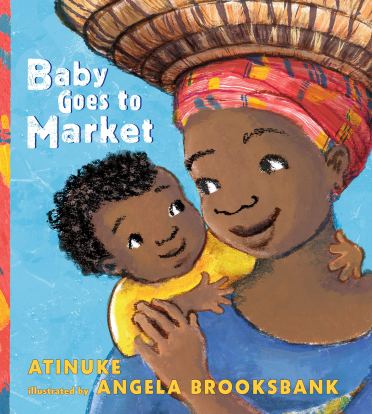
Toddler Fun! A longer book compared to my normal selections for toddlers, but I really want to use this book, and I can’t keep agonizing over how to turn Baby Goes to Market into a flannel — someday I will make that happen, but I have no ability to make people out of flannel, and I don’t have the patience for trial and error at the moment.
Early Literacy Tip: Toddlers need to move, so don’t worry if they act out stories or just skip, romp, or tumble as you read to them. They may be moving, but they are listening.
Book Recommendation:Baby Goes to Market by Atinuke
Song: Clap Your Hands by The Alana Banana Show
Fingerplay: Snowflakes Snowflakes
Snowflakes snowflakes dance all around Snowflakes snowflakes touch the ground Snowflakes snowflakes in the air Snowflakes snowflakes everywhere!
This is an adaptation of the book Buzz Said the Bee by Wendy Cheyette Lewison.
Once there was a bee who sat on a duck. “QUACK” said the duck. “There’s a bee on me.” And the duck said, “Scat,” but the bee just sat.
So the duck quacked again and sat on a hen. “CLUCK,” said the hen. “There’s a duck on me.” And the hen said, “Scat,” but the duck just sat.
So the hen danced a jig and sat on pig. “OINK,” said the pig. “There’s a hen on me.” And the pig said, “Scat,” but the hen just sat.
So the pig took a bow and sat on a cow. “MOO,” said the cow. “There’s a pig on me.” And the cow said, “Scat,” but the pig just sat.
The cow began to weep and sat on a sheep who was fast asleep. The cow had had enough of all these animals sitting on her so she said “Moo!” (remove cow from pile) and the pig said “Oink!” (remove pig from pile) and the hen said “Cluck!” (remove hen from pile) and the duck said “Quack!” (remove duck from pile) and the bee flew down to the sheep’s ear and whispered….BUZZ! He woke up the sheep from a very sound sleep and the sheep left to have fun…and then there were none!
And a big shoutout to Mr. Keith’s blog, Felt-tastic Flannelbaord Funtime, for providing inspiration for my feltboard ideas. None of my flannels are direct reproductions of anyone’s work, but I am inspired most often by his style.
As part of our virtual programming, I run a monthly school age storytime, designed for ages 6-8. This program highlights a different diverse individual from the Little People Big Dreams book series. In February, this program featured Muhammad Ali.
Each program features 1-2 books on the famous individual (one book being their matching title from the Little People, Big Dreams book series). I also highlight music from a diverse artist and include a link to an at-home packet to continue the fun and learning.
Explore More Little People, Big Dreams Storytime Outlines:
First Book: Muhammad Ali by Maria Isabel Sanchez Vegara (Little People Big Dreams)
Movement Break: Banana Banana Meatball by Blazer Fresh (GoNoodle)
Second Book: Muhammad Ali: A Champion Is Born by Gene Baretta
Closing Rhyme: See You Later, Alligator
See you later, alligator In a while, crocodile Give a hug, ladybug Blow a kiss, jellyfish See you soon, big baboon Out the door, dinosaur Take care, polar bear Wave goodbye, butterfly!
Hello again toddlers! I may be shifting the structure and content of these storytime posts soon–I have a few more weeks with a mixture of old and new content, but in March I will be back to much more repeated content than new. I don’t theme my storytimes except for special occasions (perhaps I will make a post about why that is), but I know many librarians follow themes, and I do like reading and curating storytime book lists. So many of those wonderful storytime blogs I find feel a little dated now, since they were most updated during those prime blogging years 5-10 years ago. So maybe a collection of posts on theme ideas with an eye to recent releases and diversity would be useful? Or just redundant? Let me know in the comments. Meanwhile, I’ll keep brainstorming.
And a big shoutout to Mr. Keith’s blog, Felt-tastic Flannelbaord Funtime, for providing inspiration for my feltboard ideas. None of my flannels are direct reproductions of anyone’s work, but I am inspired most often by his style.
Molly of Denali Storytime! I’ve been planning this for a while, but I’ve also been quite nervous about it–I want to do Molly justice. Our community is pretty white, our library staff is mostly white, and I am (you guessed it) white.
In case you aren’t familiar with Molly: Molly Mabray is a 10-year-old Alaskan Native (Gwich’in/Koyukon/Dena’ina Athabascan) vlogger from the fictional village of Qyah, Alaska (near the mountain of Denali). The PBS show is the first show to feature an Alaskan Native main character. Much of the cast and crew, including the voice of Molly – Sovereign Bill of Auburn – are of Alaskan Native or First Nations heritage. The show authentically portrays the life of an Alaskan Native girl (while also having a particular focus on examining and evaluating sources of information).
Molly of Denali is a wonderful show, and I encourage you to watch it yourself, explore the website (and app and podcast), and find ways to promote it at your library. I tried to keep Molly’s energy during this storytime while focusing on some of the places Molly frequently visits in Qyah as well as some of the popular storylines from the show.
There were some adjustments for me. I’m used to music being a big part of my storytimes, but the music featured in Molly of Denali is wrapped up in her culture. Dancing (often nonsensically) to the Daniel Tiger or Pete the Cat theme song felt fine–wiggling, swaying, and shaking along to Molly’s theme song felt like it might be closer to cultural appropriation. Instead, I played the Molly of Denali theme song before I came on screen, and I promoted official Molly of Denali content on YouTube with this playlist.
Looking back, I’m afraid I focused a bit too much on animals and too little on Molly’s culture. My reasoning for this during planning is that my main audience for these storytimes are ages 2-3. While some of the concepts were still there for older kids to explore, I knew I needed to keep the attention of those bouncy toddlers. In hindsight, this program would have been better suited as a separate event aimed for ages 6-8.
Just like past virtual storytimes, I curated a PDF packet that we shared with event participants. Many of these materials are from PBS. Download it here.
Watch the short preview video below. I tried to not dance through this the way I often do, instead highlighting storytime activities:
The general storytime layout–in order of what I presented–is below, with videos where applicable.
Molly of Denali Storytime Outline
Intro Song: Molly of Denali Theme Song (played before I came on screen)
Daniel Tiger Story: Crane Song
Exploring Qyah: I really like when these storytimes have some kind of unifying theme. For Molly of Denali storytime, we were simply exploring Qyah along with Molly.
Denali Trading Post: 5 Shiny Agate Stones
We started out at Molly’s parents’ store: the Denali Trading Post. Molly and her friends were trying to buy a new tubing raft, so they were selling agate stones again. We talked a bit about agate stones before jumping in with the rhyme shown below.
Down around the corner at the trading post, There were five shiny agate stones at the most. Along came a neighbor with a dollar to pay. She picked out an agate and took it away.
Dog Kennel & Vegetable Garden: Anka Playing Hide and Seek Tooey didn’t show up to help with the agate stones, so we went to find him at the Dog Kennel to make sure everything was okay. His dog, Anka, is missing again–but Tooey doesn’t think she is lost this time, just playing hide and seek…in Trini’s vegetable garden! Did you know that vegetables grow ENORMOUSLY large in Alaska? I learned that from Molly.
Anka, Anka playing hide and seek! Are you behind the _? Let’s take a peak!
Fish Camp: Five Little Salmon Off to find some fish for hungry Anka at the Fish Camp! Catch your pretend salmon by tossing out a line and reeling it in or snatching a salmon from the air like a bear.
Alaskan Animal Adventure Now that Anka was taken care of, it was finally time to explore Alaska by looking for something Molly loves and Alaska is well-known for–its amazing wildlife! I gave some hints for each animal before revealing the puppet and after the reveal, I encouraged viewers to do a quick motion.
There’s something by the river, Now what can it be? There’s something by the river, That I can’t really see.
Wrapping Things Up And that was it! For the reasons mentioned above, I didn’t have a closing song either (which was unusual for me). I once again directed people to the official Molly of Denali PBS playlist.