While Flannel Friday posts often share the work of the amazing Sarah Simpson, this is one of my flannels! Excited to share the photos and inspiration below. – Annamarie
Little Mouse, Little Mouse Playing hide and seek. Are you behind the apartment building? Let’s take a peak!
My library’s Little Mouse, Little Mouse flannel set has looked like this for many years:
The set is cute enough, and it helps practice color recognition, but I was inspired by the amazing Storytime in the Stacks blog to do something more with this set. More specifically, Jessica’s post Flannel Friday: Mouse House Makeover with Inclusivity in Mind makes a lot of excellent points about the need for representation and how culture and inclusivity go beyond race. I’m not going to go into more detail on that here because Jessica does such an excellent job. Go read her piece!
Similar to Jessica, I made a new Little Mouse set sharing a variety of types of homes. My set includes:
Apartment Building
Duplex
Lighthouse
Motel
Barn (to lead to a conversation about living on a farm)
Pigeon Storytime! Featuring the one and only bird from the Mo Willems books. I have my own personal secret: I hate this bird. The books and Pigeon’s general personality annoy me to no end. But…this ended up being one of my favorite storytimes.
The highlight, of course, was Pigeon’s attempted storytime coup:
Catch a glimpse of the whole experience in the video below.
This was another very popular program: over 600 virtual attendees!
Just like past virtual storytimes, I curated a PDF packet that we shared with event participants. Many of these materials are from Mo Willems’ Pigeon website, full of great resources. Download the activity packet here.
Watch the short preview video below. This isn’t like many of my other preview videos…instead Pigeon keeps popping up all over the library!
And watch the full storytime here:
The general storytime layout–in order of what I presented–is below, with videos where applicable.
Pigeon Storytime Outline
Intro Song: Shake Your Sillies Out by Rainbow Songs
Pigeon Book: Don’t Let the Pigeon Drive the Bus
Music: Wheels on the Bus by Jay Laga’aia
Action Song: If You’re a Pigeon and You Know It
If you’re a pigeon and you know it, flap your wings! If you’re a pigeon and you know it, flap your wings! If you’re a pigeon and you know it, And you really want to show it! If you’re a pigeon and you know it, flap your wings!
Shake your tail (shake, shake) Eat your cookies (nom, nom) Drive the bus (zoom, zoom)
Pigeon Takeover After If You’re a Pigeon and You Know It, I realized–oops!–I forgot our second book! I needed to step out to get it, and while I did just that, I put on some music and needed everyone watching to keep an eye on storytime. Sure enough, Pigeon attempted a takeover!
I didn’t actually leave the room–instead I had a table on wheels to the side of the screen. When I stepped off screen, I opened and closed the door to the room before wheeling the table on screen. I tested the height ahead of time to make sure Pigeon was visible but the table wasn’t.
I had the signs piled and ready on a table off screen. The sticks were attached from the top because it is much easier to drop something from above onto the screen then for me to try to lay below the camera and get up again. If I did this again, I might try to have this situated somehow so the signs were resting on the table, and I removed one at a time. My hand was shaking quite a bit during this portion (so the signs were too).
I ran through the timing of the song and the signs beforehand and made sure I had just enough signs to last the length of the song. I came back at the end of the song with another opening and closing of the door and a loud “PIGEON!” before returning on camera to “rescue” storytime.
Pigeon Book: The Duckling Gets A Cookie?!
Magnet: Pigeon Playing Hide and Seek
Pigeon, Pigeon playing hide and seek Are you behind the yummy cookie? Let’s take a peek!
Closing Song: I Know a PIGEON (Chicken) by Laurie Berkner We very loudly shouted PIGEON in place of Chicken throughout the song.
Extra, Extra! I filmed a few extra Pigeon videos that were on YouTube but didn’t make it into storytime:
Two Little Pigeons:
Two little pigeons sittin’ on a hill One named Jack and one named Jill. Run away Jack, run away Jill. Come back Jack, come back Jill.
Two little pigeons sittin’ on a cloud. One named soft and one named loud. Run away soft, run away loud. Come back soft, come back loud.
Two little pigeons sittin’ on down below. One named fast and one named slow. Run away fast, run away slow. Come back fast, come back slow.
Five Little Pigeons Sitting in a Tree:
Five little pigeons sitting in a tree One flew away! How many do you see?
One, two, three four!
And finally, I attempted to write a rhyme to the tune of the Itsy Bitsy Spider, but I didn’t get it quite right. Feel free to edit and make it your own!
The happy little pigeon Snuck onto the bus route. Along came the driver Who chased the pigeon out. Along came the kids who Jumped onto the bus. And the happy little pigeon Rode along with us.
Take-and-make kits; craft kits; programs to go: whatever your library calls these programs in a bag that have become a staple of no-contact offerings, one thing is fairly standard: these kits are well loved, but they take time to make. I love creating materials for kits and thinking about how a family might interact with program materials at home. I’ve introduced a new pair of kits for ages 6-11 in January 2021: Book Club in a Bag. This week’s feature: Shuri by Nic Stone.
The Book Club in a Bag kits look a bit different from some of my previous kits. Instead of focusing on just one book universe, these kits each feature four characters, hopefully some old favorites as well as some new, diverse characters.
In January, these featured characters included (links provided as the bag contents are shared on Book Cart Queens):
The Shuri Kit can be as simple or as elaborate as you’d like. Most of this kit can be re-created simply using a printer, with the addition of extra items depending on your budget.
Want to use make a Shuri Kit at your library? Download the PDFs at the links below, or write a comment or send an email (bookcartqueens@gmail.com) for editable files.
Shuri General Materials
Each bag contains some of the same basic materials, and the Shuri kit is no different.
Shuri Bookmark – All Books
Slideshare not working? Download the PDF listing all book titles here.
Shuri Bookmark – Readalikes
Slideshare not working? Download the PDF of the Readalike titles here.
The Shuri readalike bookmark features these titles:
Anti/Hero by Kate Karyus Quinn and Demitria Lunetta
Slideshare not working? Download the PDF of the discussion questions here.
The Shuri Discussion Questions include:
Shuri has the responsibilities of a princess, even though she really wants to spend time creating fascinating new inventions. When have you had to choose between something you have to do and something you love to do?
When Shuri first realizes there is a problem with the Heart-Shaped Herb, the adults seem too busy to listen. How do you convince people to listen when you have something important to share?
Shuri meets many superheroes on her adventures. Who is your favorite superhero? If you were a superhero, what would your superpower be?
Think about K’Marah and Shuri’s relationship. Are they friends at the beginning of the novel? What about at the end? How do you know?
Shuri Swag – Activity Book
This bag also included a Shuri Superhero Activity Packet. Download a ready-to-print PDF here.
Shuri Crafts, Games, and More
This particular bag included two activities: a Create Your Own Superhero activity sheet and a pack of Superhero BINGO carts.
Download the Create Your Own Superhero Sheet here:
I also included a set of Superhero BINGO cards. I first used these for a Facebook Live event a few months ago, but I created a play at home, pre-printed set for each Shuri kit.
Above the Rim: How Elgin Baylor Changed Basketballby Jen Bryant (biography) Gr. 2-4. Learn about the life of the extraordinary Elgin Baylor, an incredible and innovative basketball player that helped shape the NBA and combatted racism with a one-man protest after not being permitted to stay in any hotels or eat in any restaurants in the segregated south.
Wow, this was a particularly stellar picture book biography! Great artwork and a well-framed story with high appeal.
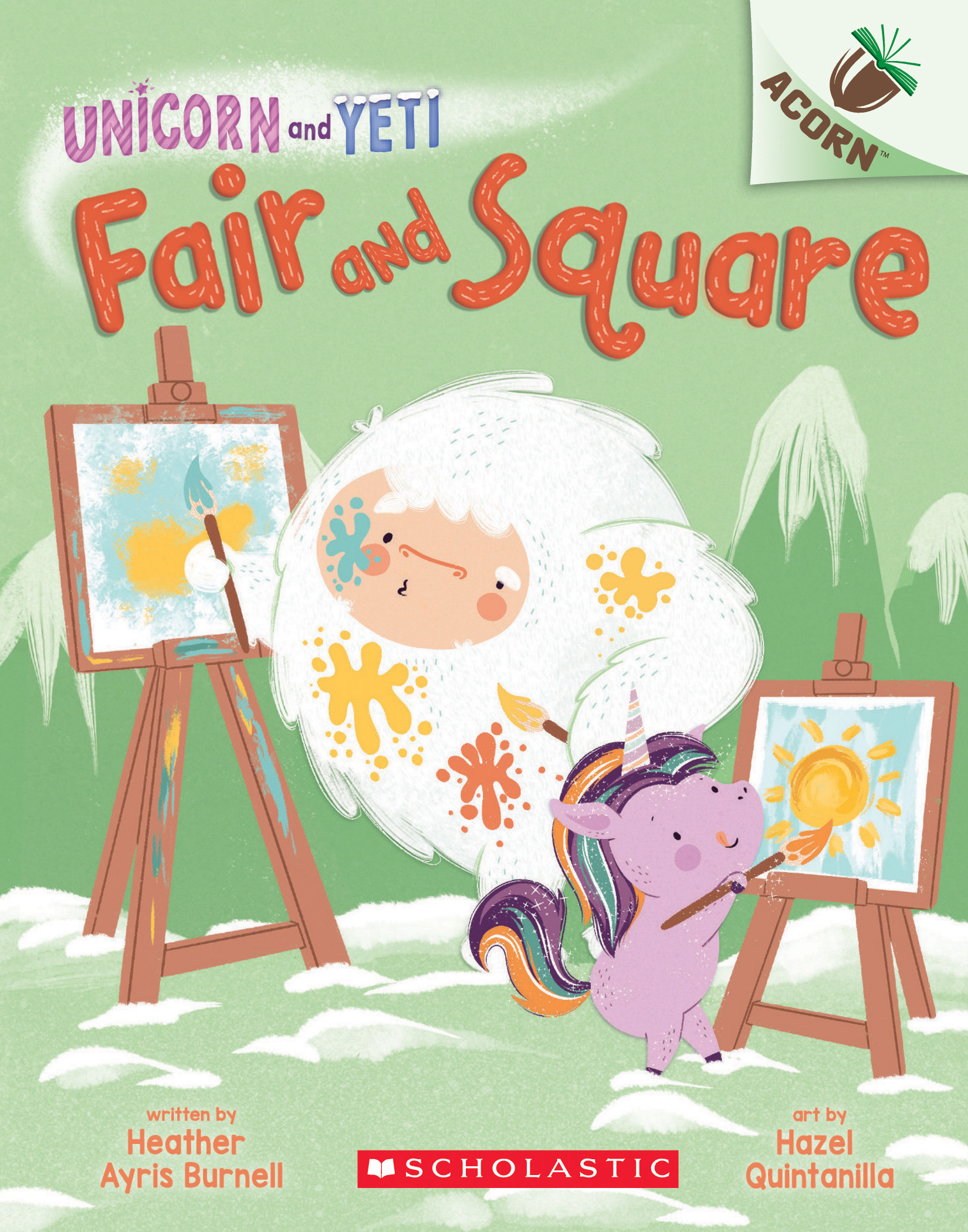
Fair and Squareby Heather Ayris Burnell (reader) Gr. 1-2. Another excellent Unicorn and Yeti beginning reader. I can’t get enough of these–the vocabulary and simple sentence structure are on point, the illustrations are adorable, and the stories even teach simple concepts. This title focuses on shapes, being creative in your own way, and different ways to think about fair and equal.
Furiaby Yamile Saied Méndez (teen) Gr. 8+. Camila doesn’t just love fútbol–she is good at playing. Not just good, incredible. On the field, she is La Furia, destined to leave Argentina and play on an international team. But in Argentina, women are not expected to play sports. A few years ago it would have been illegal for her to play at all. Now, she plays in secret, tiptoeing around her abusive, short-tempered father. But when Camila has a chance to play in a game where her ability could catch the eye of a coach, she needs her parents’ permission. How can she make her dream happen?
This one was a little too long for me. I liked the moments of action. Surprisingly to me, this included the futbol games. But most everything in between practices and games felt like it drug on. While Camila’s story at home felt like a strong arc, her romance with Diego felt a bit predictable, down to the end result. I see a definite audience for this strong, feminist story, but I don’t think I am it. I will still be recommending this, but I may not be personally looking for a sequel.
If You’re Scary and You Know It!by Carole Gerber (board book) Toddler-PreS. A “spooky” version of the song If You’re Happy and You Know It. The illustrations are cute and appropriate, with the only reference to Halloween in the last spread’s Trick or Treat–which could be skipped if this was to be adapted for a holiday-less storytime.
The author does a great job reimagining the tune, though I wish the lyrics were as repetitious as the original song. Generally, kids seem to like to sing along to books like these, and that simply isn’t the structure here. While the verses keep to the beat and tune, almost every line in each lyric is different. The first and last lines of each verse do end with clear actions, good for an energetic crowd.
Never Touch a Snake!by Rosie Greening (board book) Baby-Toddler. Always a fan of these sensory board books. This book’s internal story showcases animals as circus performers (clown, acrobat, etc.). Not my favorite, but the sensory elements and bright illustrations still work well for the intended age.
Raven Squawk, Orca Squeakby Roy Henry Vickers (board book) Baby-Toddler. A gorgeous board book with lightly textured illustrations by Indigenous artist Roy Henry Vickers. Rhythmic text emphasizes the sounds found on the West Coast of Canada: thunder booming, big waves crashing, paddles swooshing, ravens squawking, orcas squeaking, and more. Add this one to your board book collection.
Slime for Dinnerby Geronimo Stilton and Tom Angleberger (graphic novel) Gr. 2-4. Lots of laughs and bad puns as Geronimo Stilton’s adventures continue in the Tom Angleberger graphic novel adaptation. Geronimo and friends are invited to a mystery dinner at Cacklefur Castle, competing to win a special trip. Geronimo doesn’t want to go to the dinner, and he really doesn’t want to win, but Thea pulls him into the spooky (and slimy!) fun, especially when the fake-mystery turns into a quest for a family heirloom that was really stolen.
A Thousand White Butterfliesby Jessica Betancourt-Perez (picture book) Gr. K-1. Isabella, her Mama, and her Abuelita just moved from Colombia to the United States. Her Papa, and all her friends, are back home. Isabella is nervous but a little excited for her first day at her new school–when her very first day is cancelled due to too much snow.
A sweet first-day-of-school story filled with lots of emotions and an adorable start to a new friendship. Plenty of Spanish words interspersed throughout with a glossary in the back. A great addition to your library collection.
Wheelsby Sally Sutton (picture book) Toddler-PreS. “Wheels go fast. Wheels go slow. Shout what’s coming if you know!” Read a hint and use the pictures to guess what vehicle is coming next.
Oh that was fun! A definite storytime read, though this is sorely lacking in diverse characters. Some words don’t entirely align with words most commonly used in the U.S. — words like “motorbike” for motorcycle. The repetition will make this a winner in a toddler or preschool program though!
Rambling Thoughts: Shipping delays brought 15 boxes of newly ordered children’s books to my library, all at once, so there are a bunch of titles that I finally got to read this week! And more to come next week.
Also…I have something to ask this week. And I’m just going to push through the awkward and the “should I mention it at all?” and just do the asking already: My name is on the ALSC ballot for the 2023 Caldecott Committee! If you are a children’s librarian, and you aren’t a member of ALSC, it is a phenomenal organization that has helped me grow as a librarian and connect to other professionals in this field. If you are a member of ALSC, make sure to vote! No matter who you vote for, this is your chance to impact the direction of the organization, particularly with those important votes for President Elect and the ALSC Board of Directors. There are some really phenomenal people on the ballot this year in every category. If you happen to have an extra vote for me in the Caldecott section I’d really appreciate it–Caldecott is THE DREAM–but really, vote regardless.
Make sure to stop by on Tuesdays for short reviews of some of these titles!
Hello? Babies? I’m back! It has been a few months since I’ve planned a Baby Storytime program (at our library, that means ages 0-23 months). I’m happy to get back into the groove. Much of this week is repeated content that I am very familiar with, as I have Pigeon Storytime on Saturday (well, today by the time this is posted!), so I wanted to make this storytime as easy as possible.
Baby Storytime Intro Song & Rhyme – Wake Up Toes & We Clap and Sing Hello
Early Literacy Tip: When playing, have fun making noises like animal sounds or truck sounds. Hearing different noises and experiencing different pitches and volumes helps baby’s language development.
Book Recommendation:The Baby Goes Beep by Rebecca O’Connell
Song: Wheels on the Bus by Jay Laga’aia
Action Rhyme: Baby Hokey Pokey
You put your arms up, You put your arms down, You put your arms up, And you wave them all around You wiggle, wiggle, wiggle, And you tickle, tickle, tickle That’s how the baby pokey goes (clap along) Yeah! (arms in the air)
Continue with: legs, whole baby
Bounce: Tiny Little Babies
Tiny little babies love bouncin’ bouncin’, Tiny little babies love bouncin’ so. Tiny little babies love bouncin’ bouncin’ Tiny little babies love bouncin’ yeah.
Bounce to the left, Bounce to the right, Now hug that baby nice and tight.
And a big shoutout to Mr. Keith’s blog, Felt-tastic Flannelbaord Funtime, for providing inspiration for my feltboard ideas. None of my flannels are direct reproductions of anyone’s work, but I am inspired most often by his style.
Reader’s Theater was a popular in-person program, pre-pandemic. It was actually one of the last programs I ran in person, with our regular season running each February (learn more about in-person Reader’s Theater here, though the process is pretty similar to what is outlined below).
My Reader’s Theater kids are known for their energy, so I wasn’t sure what I was getting into by making this a virtual program. But, in the end, other than internet connection issues, the program was pretty seamless.
Before the Program – Script Prep!
Most of my work takes place before I see the kids the first time, and this was also the case virtually. Personally, I don’t use standard “reader’s theater scripts” that you can find on Google–they often feel forced or aren’t as fun for my 3rd-5th graders. Instead, I look for funny picture books that can be adapted to a reader’s theater style performance. I also have a stash of old Zoom Playhouse Scripts. The Zoom website is no longer available, but some of these can be transcribed from YouTube videos.
Knowing that I both had some new faces among my signups and that I wanted some familiarity, this year’s scripts included the titles below. Click on the links on the titles to download the scripts to use in your own program.
Be Quiet (adapted from the book by Ryan T. Higgins)
I plan for a full group of 15 kids. Not every kid is in every play. I select scripts that allow for 60 parts total (four per reader). Many picture books allow for multiple narrator roles, allowing me to tweak scripts to fit the number of parts I need to reach 60.
Once I have all of my scripts, I print them all out and highlight the appropriate lines for each part. Then, the sorting begins.
I sort scripts into folders before the first rehearsal. In person, kids then randomly select a folder without knowing what parts are inside. Virtually, I had to distribute folders out the drive thru window pickup service, so I had to pick parts for kids ahead of time. When I had a toss up for who should get a part with more lines, I tended to give it to kids who were aging out of the program this year (especially those who had been doing this a while).
To break scripts down into folders, I try to aim for the following:
4 scripts per folder
At least 1 script that is a “lead” role (more lines)
Not all parts in one folder are narrator roles
If possible, spread scripts out based on the chosen performance order (not all scripts are at the beginning or end)
Each folder has two labels on the front with the parts of the performer and the performance order. I use three-prong folders, so scripts are hole-punched and inserted into the prongs.
Another difference: in person, kids would only get copies of the scripts for the plays they were in. Virtually, each kid got a copy of every script because I new we would have absences and drop outs, and I would need to assign those roles. In person, I handed kids the folder of the absent participant, virtually, I didn’t want to deal with sending links to virtual copies of scripts.
Some other practices to make script assignment smooth:
I create a master sheet for me, organized by play, labeling which scripts/performers have which parts. This helps a lot when 15 8-11-year-olds are paying zero attention to which play comes next.
I have a jar on hand with the names of each kid inside on a separate slip of paper. If someone is absent, I pull a name out of the jar to evenly distribute extra parts.
Reader’s Theater Virtual Program
This virtual program followed a similar schedule to in-person Reader’s Theater:
Week 1: Zoom Scavenger Hunt, Intro to Reader’s Theater, Practice Scripts
Week 2: Zoom Scavenger Hunt, Practice Scripts (continued from week 1)
Week 3:Zoom Scavenger Hunt, Full Rehearsal
Week 4: Performance for family, friends, and more
We started the first three virtual sessions with a Would You Rather question and a Zoom scavenger hunt.
Would You Rather Questions included:
Would you rather only be able to get around by hopping like a kangaroo or leaping like a ballerina?
Would you rather have ketchup randomly come out of your belly button or your nose?
Would you rather be able to only eat your favorite food for the rest of your life, or would you rather never be able to eat it again?
Zoom Scavenger Hunt Items included:
Week 1 1. Something you can wear on your head 2. Something with words on it 3. Something related to dinosaurs 4. Something with wings 5. Something that is meant to get wet 6. Something that makes a sound 7. One of these: rock, paper, or scissors 8. A spoon 9. Something bumpy 10. Something that makes you laugh 11. Something you really want to share 12. Your script!
Week 3 1. Something you can wear on your head 2. Something that can hold something else 3. Something related to animals 4. Something purple 5. Your script!
We only rehearsed one script at a time, so the kids who are not currently practicing are welcome to watch and give feedback, or they can explore some busywork packets–mad libs, dot-to-dots, kawaii coloring sheets, Captain Underpants Name Changer, etc. Download our busywork packet here.
On performance day, family and friends could use the same link to watch the performance. I asked them to mute and turn their cameras off (and did so for them if they did not), and gave them instructions on how to only view the performers on their screens. Everything went smoothly, with a great performance by all!
Reader’s Theater: Virtual Tips
I’ve run this program a lot in person, and I imagine everyone’s experience (virtual or in person) will be very different. Some things I discovered virtually:
A lot more kids came once and never returned or never came at all. This meant our final performers ended up with more parts–but it also made things a little more challenging to organize when we got to plays that had more parts than we had performers.
“Correcting” kids feels very different virtually. I don’t like to actively correct the kids in any setting, but in person, another kid would more often step in and try to help someone struggling with pronunciation. Sometimes, I would make sure I was seated in a spot situated near someone who needed a little more help reading (or someone who struggled to pay attention to a long script). Virtually, other than through chat, it isn’t really doable to whisper something to one kid without everyone hearing. I mainly only stepped in if someone was really having microphone issues or internet connection problems.
Speaking of internet connection problems: they persist, kids can’t always solve the problems on their own, and you can’t always help either. When reading scripts that rely on reading in order and moving through a lot of lines quickly, internet lags can make a 5-minute script take 15 minutes.
Figure out, or prepare for, microphone issues ahead of time. I’ve seen some teachers may require kids to keep their microphones on during a virtual class. I didn’t want to require that, but I debated requiring kids to keep them on during a play they were performing in to help keep things moving. I decided not to, for privacy, and that ended up being the best decision. It slowed things down, but one of our particular participants who muted between every line had a screaming baby in the background. It added a few minutes to things, but it was more enjoyable for everyone.
Take-and-make kits; craft kits; programs to go: whatever your library calls these programs in a bag that have become a staple of no-contact offerings, one thing is fairly standard: these kits are well loved, but they take time to make. I love creating materials for kits and thinking about how a family might interact with program materials at home. I’ve introduced a new pair of kits for ages 6-11 in January 2021: Book Club in a Bag. This week’s feature: Phoebe and Her Unicorn by Dana Simpson.
The Book Club in a Bag kits look a bit different from some of my previous kits. Instead of focusing on just one book universe, these kits each feature four characters, hopefully some old favorites as well as some new, diverse characters.
In January, these featured characters included (links provided as the bag contents are shared on Book Cart Queens):
The Phoebe and Her Unicorn Kit can be as simple or as elaborate as you’d like. Most of this kit can be re-created simply using a printer, with the addition of extra items depending on your budget.
Want to use make a Phoebe and Her Unicorn Kit at your library? Download the PDFs at the links below, or write a comment or send an email (bookcartqueens@gmail.com) for editable files.
Phoebe and Her Unicorn General Materials
Each bag contains some of the same basic materials, and the Phoebe and Her Unicorn kit is no different.
Phoebe and Her Unicorn Bookmark – All Books
Slideshare not working? Download the PDF listing all book titles here.
Phoebe and Her Unicorn Bookmark – Readalikes
Slideshare not working? Download the PDF of the Readalike titles here.
The Phoebe and Her Unicorn readalike bookmark features these titles:
Slideshare not working? Download the PDF of the discussion questions here.
The Phoebe and Her Unicorn Discussion Questions include:
Are you more of a Phoebe or a Marigold Heavenly Nostrils?
Phoebe was granted a magical wish when she rescued Marigold. If you had one magical wish, what would you wish for?
Most of the Phoebe and Her Unicorn books are collections of comic strips. What makes this book different than other graphic novels you have read?
How does the friendship between Phoebe and Marigold change and grow throughout the series? How do you see that difference in the illustrations and the text?
When the story starts, do you like Phoebe and Marigold equally? How does that change?
Phoebe and Her Unicorn Swag – 1″ Buttons
This bag also included 5 1″ Phoebe and Her Unicorn buttons. Download a printable PDF to make them yourself here.
Phoebe and Her Unicorn Crafts, Games, and More
This particular bag included three activities: a drawing guide, a unicorn bookmark craft, and a unicorn puppet craft.
The drawing guide borrowed heavily from the resources available on the Publisher website. Find more of those here.
We also included the supplies to make a unicorn puppet craft and a unicorn bookmark. The two crafts needed a set of instructions, glue dots, a piece of white cardstock, and shared unicorn accessories sheets. Kids were encouraged to design their own unicorn pieces, but they could choose from the included pieces if they preferred.
Blades of Freedomby Nathan Hale (graphic novel) (nonfiction) Gr. 4-5. Framed around the sale of the Louisiana Purchase, the newest Nathan Hale title really explores the Haitian Revolution.
I liked this book a lot, though I don’t think the connection to the Louisiana Purchase was needed. Perhaps the author was trying to make a more direct connection to American history, but I think this book series is popular enough that the initial tropes don’t need to be followed as strictly. It does all tie together eventually, but I would have rather this book focused entirely on the Haitian people instead of suddenly tossing Thomas Jefferson into the narrative at the end.
The Challenger Disasterby Pranas T. Naujokaitis (graphic novel) (nonfiction) Gr. 4-5. Learn about the explosion of the space shuttle Challenger in January 1986 through the eyes of school children living on a space station above Mars 400 years in the future.
This was enjoyable and approachable for kids with no background knowledge. Following a similar format to First Second’s popular Science Comics, this took a complicated and tragic situation and made it understandable and interesting for young readers. This is my second History Comics graphic novel, and I learned more from this one (and was engaged more in this one) than the Great Chicago Fire title. I was a bit confused about the computer system the kids were using–the holograms of the dead astronauts seemed to know about their lives, about the kids’ lives in the future, but not always about their own deaths, which felt odd.
Concrete Roseby Angie Thomas (teen) Gr. 9+. We meet Maverick Carter before Starr is born–before Starr is conceived in fact. Maverick is trying to figure out high school while hanging out with his favorite cousin and dealing on the side for the King Lords. What he doesn’t expect is Iesha–the girlfriend of one his close friends–to get pregnant soon after they have sex. It was just one time, surely the baby can’t be his–but it is. And not just that, but on the day the paternity results come in, Iesha and her mom skip out on Maverick, leaving him with a squirming, adorable, poop-filled infant.
Maverick knows this baby is his responsibility, and he is willing to put in the work to do his best to take care of baby Seven while helping his mom stay afloat. He doesn’t want his child to grow up without a father, so he takes his chance to get out of drug dealing. But things are never that simple, and after the murder of a loved one and the possibility of a second baby on the way, Maverick has to grow up and make some hard decisions fast.
This was amazing, as expected. So much character development, and I really want more of this story, Maverick’s story. No THUG knowledge necessary to enjoy this, though there are a few call backs that fans of the first book will appreciate. This particular line sticks with me: “Because the apple doesn’t fall far from the tree?…it can roll away from the tree. It simply needs a little push.”
Everything Angie Thomas writes is phenomenal, but I feel like I can hear the progression in her writing from THUG to On the Come Up to Concrete Rose–and I’m thrilled to see what will come next.
Fly on the Wallby Remy Lai Gr. 3-4. Henry Khoo is done being treated like a baby. He doesn’t need a chaperone, and he is going to prove it by flying halfway around the world to Singapore all by himself. Since his family has decided to cancel their summer trip, Henry is going to make the journey alone without anyone’s knowledge. He’s prepared: he is just old enough to fly alone, he knows the steps to get through the airport, and he even has an alibi to keep him covered until his plane lands. But everything goes wrong when he realizes that he knows someone on the flight–and not just any someone, but the very person that knows he is the creator of an anonymous gossip website about students at his school. Will Henry make it to Singapore in one piece? Or will his nemesis end his adventures early?
This was fun, though I think I missed a lot by listening to this. I didn’t see any of the illustrations, and there were definitely moments I was confused. Henry is full of energy, and while this does translate well over audio, it sometimes feels a little all over the place. However, I think this is a fun, diverse readalike for fans of Wimpy Kid, Terrible Two, and other fast, funny books.
Oonaby Kelly DiPucchio (picture book) Gr. PreS-K. Adorable mermaid Oona loves collecting things. Sometimes her adventures lead her to trouble, but that doesn’t stop her from pursuing her biggest find yet: a shiny gold crown stuck at the bottom of a dark rift.
Absolutely gorgeous illustrations that complement the story while adding more details. And I absolutely cannot get over Otto the Otter companion, or how after finally getting the crown, it most obviously belongs around Otto’s stomach. How else could you wear it? Like so many other reviewers have said, more Black mermaids please.
The Ridiculous and Wonderful Rainbow Hatby Aaron Starmer Gr. 3-4. Locker 37 adventures continue at Hopewell Elementary School. This time, fourth grader Riley needs help pulling off the most epic prank ever: dropping 10,000 ping pong balls from the ceiling ducts above the gym during the upcoming juggling-filled assembly. Locker 37 provides Riley with a magical hat that creates Riley clones. Surely a never-ending number of Riley’s can pull off such an elaborate prank?
More Locker 37 shenanigans. This series is a great readalike for fans of the 13-Story Treehouse, Terrible Two, and other tales filled with lost of humor and wry adventures. Quick pacing and a lot of action will appeal to reluctant readers.